Choose a Coat Opening beside a Pleated Skirt
Compare a coat’s open and intended closed arrangement beside a pleated skirt, keeping the skirt’s waistband and ordinary seated movement central to the outfit.
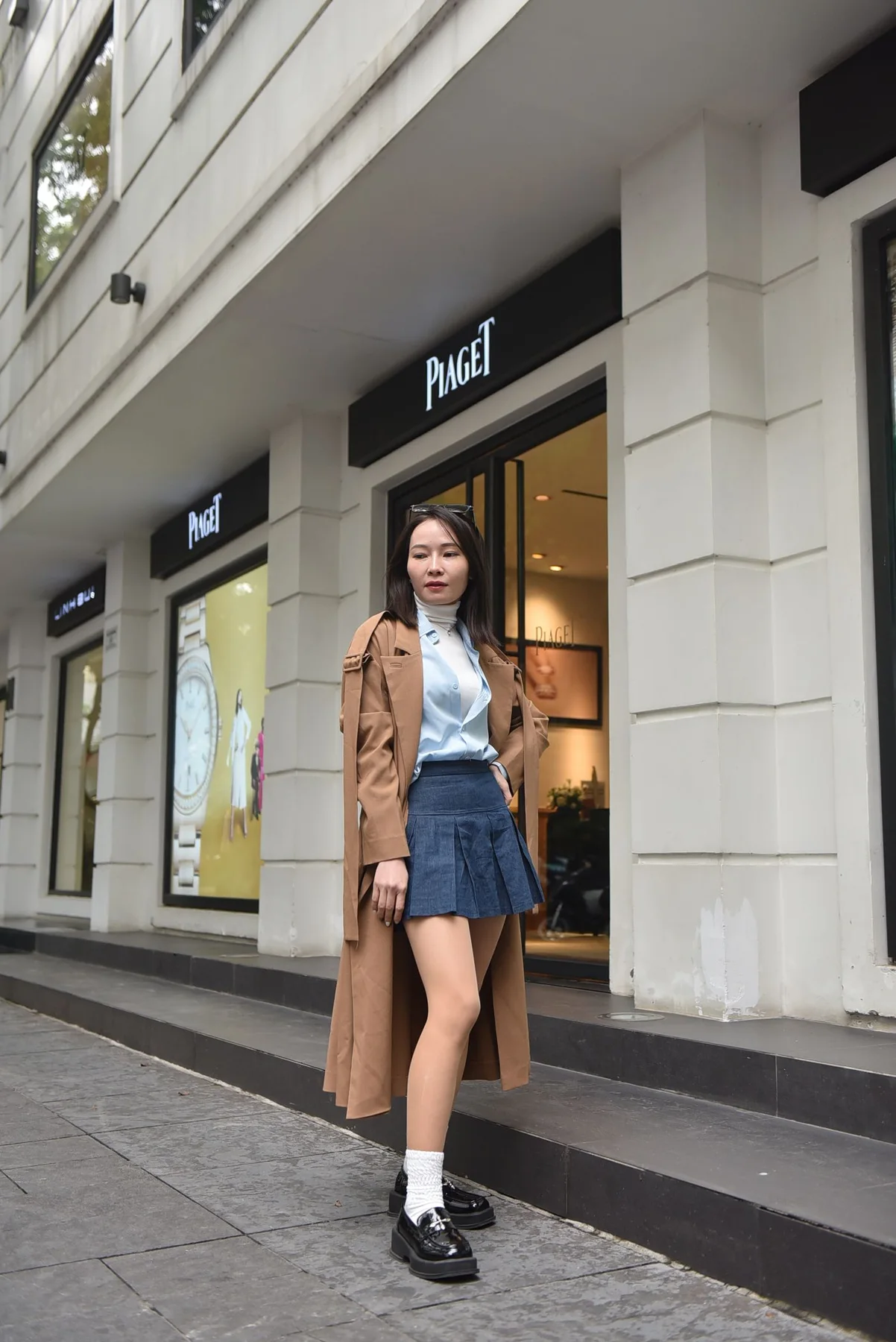
Editorial stock photograph · Source and photographer. Styling illustration; no product endorsement implied.
A pleated skirt can look quite different beneath an open coat and beneath the same coat fastened. The visible pleats, waistband and lower edges form different arrangements. Compare those versions before deciding that the skirt needs another outer layer. A familiar coat may already offer a useful option, provided the actual garments remain comfortable and their intended construction stays in view.
Put the skirt in its real position
Dress in the skirt with the top and shoes you intend to use. Read its relevant guidance and settle its waistband in the intended wearing position. Moving it unusually high or low merely to match a coat photograph can obscure the question you actually need to answer.
Compare the coat openings
Add the actual coat, first in the open arrangement you expect to use. Notice how much of the skirt shows and whether the top and waistband remain visible. You may enjoy a narrow glimpse of pleats or prefer a wider area. Keep that as a personal choice.
Then use the coat's intended fastening where suitable. Do not force a closure or invent an attachment to retain the first outline. The two versions need not look identical to be useful; they need understood roles within the real day's transitions.
Check the waist meeting point
Sit and stand gently in a suitable space. Notice where the coat and skirt meet rather than examining only the front hem. A coat can sit neatly when still while its opening changes once you sit down.
If an edge needs repeated correction, try another existing combination before concluding that the skirt demands a shopping trip. Another familiar top or a different supported coat opening may make the pairing easier without replacing either garment.
Add ordinary belongings
Include the bag with the contents you genuinely carry, within its guidance. Its intended strap can change how the coat opening lies. Review that relationship rather than arranging an empty outfit for a photograph and adding belongings only when leaving.
Take the coat off if that is likely indoors. Check the skirt-and-top outfit independently and give the coat an appropriate temporary place. A useful outer layer should join a considered base rather than conceal an unresolved waistband arrangement.
Keep the result specific
Record which coat opening worked beside this skirt if the observation helps. A short note naming the garments preserves more useful information than a rule about all pleats or all coat lengths. Another construction can produce a different relationship.
Compare two ordinary versions
Try an open coat over a tucked top, then the same coat with its intended fastening closed. Keep the skirt and shoes unchanged. In the open version, the waistband may become a clear horizontal point; in the closed version, attention may move to the strip of pleats below the coat. Decide which version supports the actual activity rather than asking them to look identical.
If you spend much of the day seated, include the seated view in the comparison. Notice whether you are comfortable letting the coat open naturally or keep pulling its fronts over the skirt. That observable difference can guide the choice more clearly than a rule about which hem should always be longer.
Related reading
Finding a Midi Skirt Length That Works with Your Shoes, Autumn Layering Without the Bulk.
Check your wardrobe first, note the gap you want to fill, then compare fabric, fit, care instructions and the retailer’s current return terms.
Explore our retailer directory →