
Give a Cup Carrier Its Own Outfit Role
Give a cup carrier a defined outfit role, checking its actual instructions, supplied parts and carrying position before treating a small crossbody accessory as an ordinary handbag.
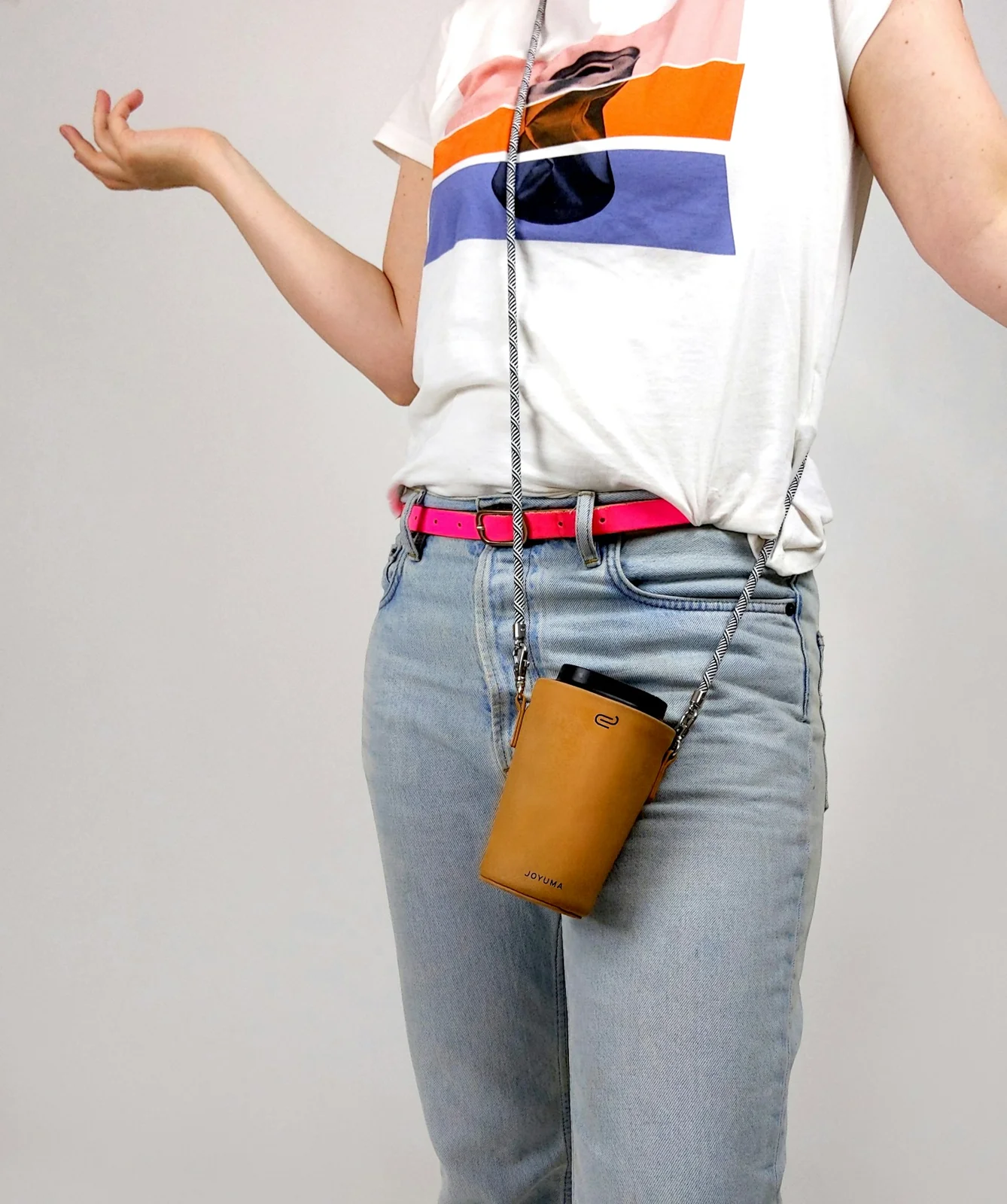
Editorial stock photograph · Source and photographer. Styling illustration; no product endorsement implied.
A cup carrier can resemble a small crossbody bag in an outfit photograph while having a much narrower intended job. Its visible pouch and cord do not establish that it is suitable for a phone, keys or every takeaway cup. Begin with the actual product and the item it is intended to carry. Then consider the clothing relationship without allowing an attractive street-style image to supply missing use instructions.
Establish the real carrying purpose
Read the carrier's own information and identify the intended vessel or stated compatibility. Keep any relevant limits, supplied parts and handling instructions together. A similar-looking cup in a photograph does not confirm that the vessel used during the day is appropriate.
Separate the carrier from the normal handbag plan. It may serve one specific part of an outing while other personal belongings still need their existing suitable place. Do not add loose objects to the carrier simply because its shape resembles a general pouch.
Try the stated arrangement with the actual clothes
Follow the product's intended setup and use an appropriate ordinary comparison. Notice where the cord lies across the neckline and where the carrier rests beside the torso. A light top and a substantial coat can create different overlaps.
Keep the outfit in its normal position. Avoid pulling a shirt sideways or shortening an unfamiliar cord arrangement just to reproduce a photograph. Any adjustment should stay within the product's actual intended operation.
Consider the moments when hands are needed
Think through a realistic sequence: leaving the counter, walking to the next stop and pausing at a table. Identify when the vessel is handled and where the accessory belongs while not in use. The image of a hands-free moment does not describe every part of that sequence.
Do not let the carrier create an unplanned conflict with the ordinary bag or outer layer. If several straps cross the same area, compare the actual full group. Removing an unnecessary accessory may be more useful than rearranging every garment around it.
Read appearance after the purpose is clear
Look at the carrier's visible colour and size within the whole outfit. A small warm-toned area can be enough detail beside a printed shirt; another matching bag or belt is optional. Judge the object in its normal carrying position rather than holding it centrally for a posed comparison.
Keep any private outfit note factual about what the product is. Calling a cup carrier a phone pouch can create a false memory of its purpose and later encourage an unsuitable packing choice.
The useful result is a small accessory with a defined task, an understood setup and a clear place in the day's sequence. Its styling role can remain modest. The clothes should support ordinary use, while the product's own information continues to determine what it is actually meant to carry.
Related reading
A Shirt with the Bag’s Intended Strap Arrangement, Choosing an Everyday Handbag by What You Carry.
Check your wardrobe first, note the gap you want to fill, then compare fabric, fit, care instructions and the retailer’s current return terms.
Explore our retailer directory →