Read a Frayed Jeans Hem beside Brown Slip-Ons
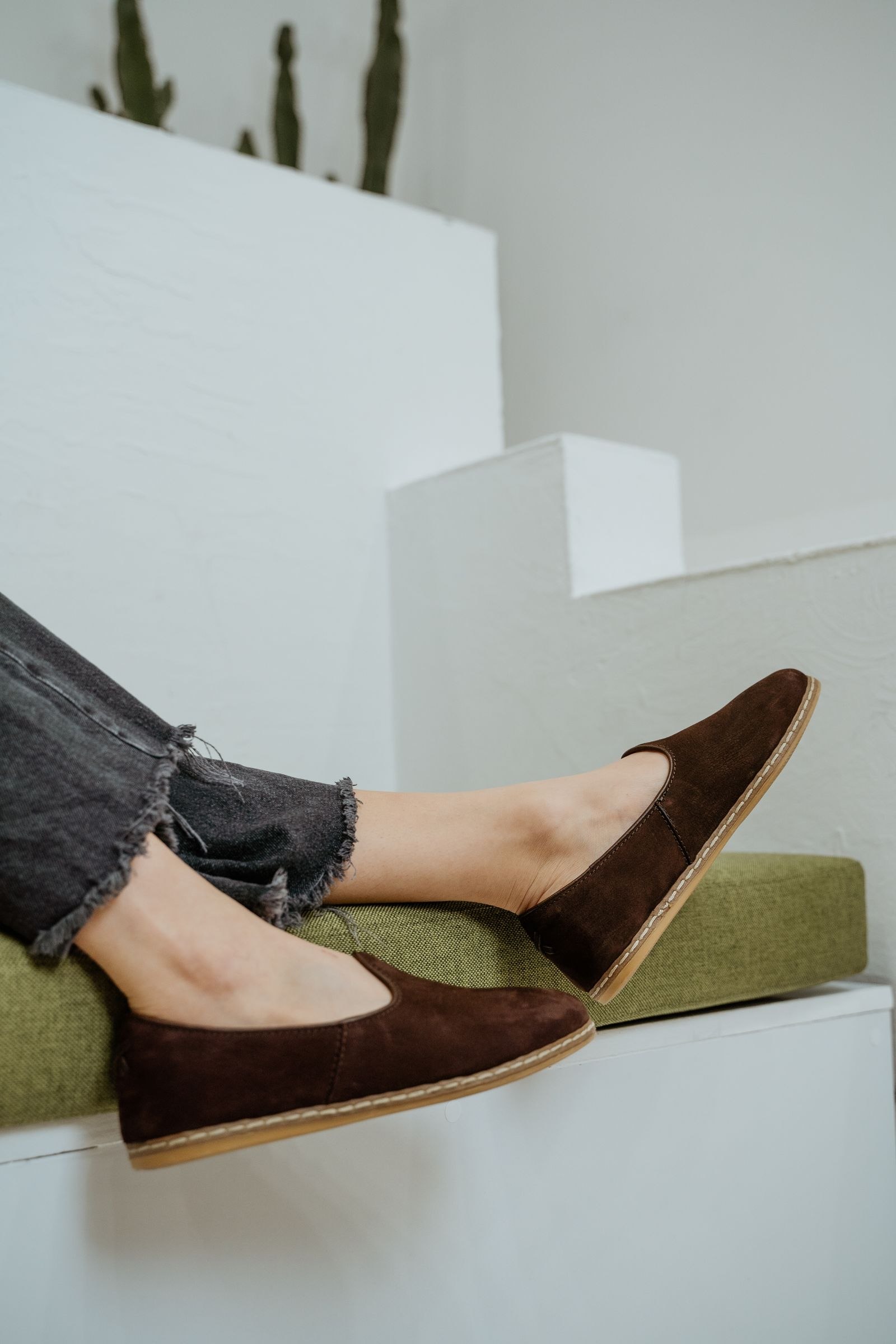
Read a frayed jeans hem beside brown slip-ons, comparing the visible shoe opening and ordinary seated view before deciding the uneven edge requires a different footwear purchase.
Editorial stock photograph · Source and photographer. Styling illustration; no product endorsement implied.
A frayed jeans hem creates an irregular boundary above a quieter slip-on shoe. The loose-looking edge can make a familiar pair appear more casual without any accessory change. Compare the actual garments before deciding another shoe is needed to make the line look finished. A close photograph emphasizes every strand, while the complete outfit may show only a modest textured break between dark denim and brown footwear.
Identify the edge you actually have
Look at the jeans' existing condition and known construction. A deliberately finished uneven edge is different from an unresolved garment concern. Keep any damage or care question with the actual item rather than assuming every loose-looking strand belongs to the design.
This is a visual comparison, not a suggestion to cut, pull or distress the hem. The outfit can be reviewed as it is. Any alteration decision deserves its own appropriate information and consideration.
Add the familiar slip-ons normally
Use suitable footwear whose ordinary role is understood. Notice how much of the upper appears beneath the denim and whether the shoe opening remains visible. A lower hem can conceal that boundary while another pair of jeans reveals more.
Keep practical suitability distinct from appearance. A photograph of brown shoes and dark denim cannot establish fit or comfort for another person. The actual pair's requirements remain relevant alongside the visual relationship.
Compare standing and seated amounts
Stand normally, then sit in an ordinary appropriate position. The jeans may expose more ankle or shoe while seated. This change helps explain why the same combination appears quieter in one image and more broken up in another.
Avoid lifting the hem in every reference photograph. A deliberately raised trouser leg records a display of the shoes rather than the ordinary outfit. Keep one unposed view that preserves the actual overlap.
Read texture at the full-outfit scale
Look from a normal distance with the intended top and bag. The frayed boundary may become a small detail beneath much larger fabric areas. Do not let a close crop convince you that every part of the outfit must be simplified around it.
If the top also has visible texture, compare the relationship rather than assuming two textures are automatically excessive. Their size and position matter. A broad knit and a narrow denim edge can remain very different kinds of detail.
Keep the footwear question specific
If another suitable owned shoe is available, compare it separately while keeping the jeans and upper clothes steady. Name whether it changes the exposed ankle area, outline or colour, rather than describing the entire second version as more polished.
Save a short note about the actual pair you would repeat. The irregular dark edge leaves enough of the brown upper visible is a useful observation. It lets familiar clothing retain its character without turning an uneven hem into an automatic demand for new shoes or an improvised alteration.
Related reading
Jeans for Flats and Boots: Choosing a Useful Hem, Read a Slip-On Shoe’s Opening beyond the Front View.
Check your wardrobe first, note the gap you want to fill, then compare fabric, fit, care instructions and the retailer’s current return terms.
Explore our retailer directory →