Finding a Necklace Length for the Necklines You Wear
A practical guide to necklaces with different necklines, with specific checks, useful tradeoffs, troubleshooting and a manageable care plan for ordinary days.
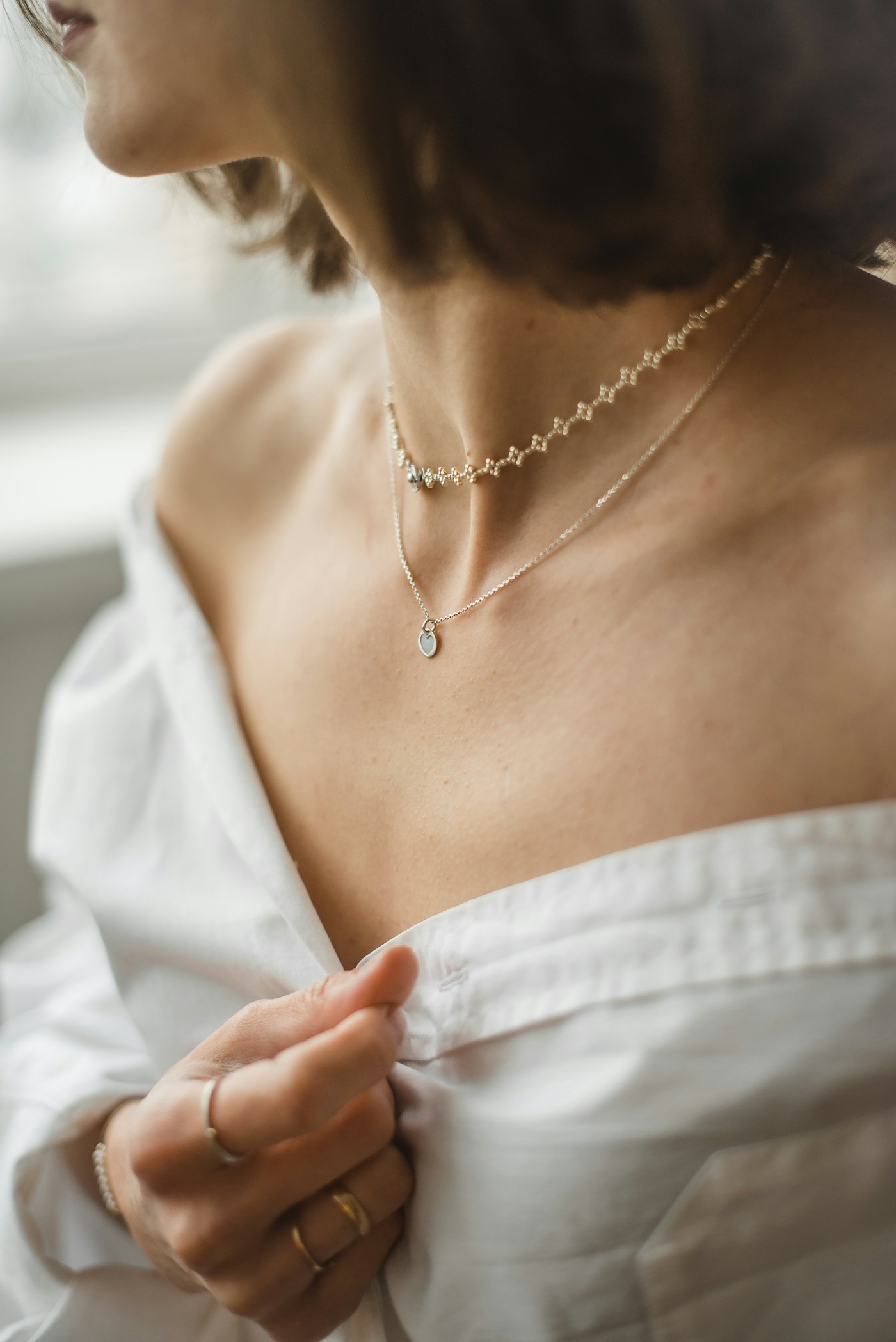
Editorial stock photograph · Source and photographer. Styling illustration; no product endorsement implied.
A necklace can clarify an outfit's neckline or spend the day slipping beneath it. The difference is often a few centimetres and the position of the pendant, rather than whether the piece is fashionable. Begin with two or three tops you wear regularly and the necklace already owned. Assess them together before buying a new chain length to solve a problem that may belong to only one top.
Compare where the necklace actually rests
Fasten the necklace and let it settle naturally. Check the position standing and seated, with shoulders relaxed. A pendant that sits on the edge of a neckline may repeatedly fall inside or flip over the fabric. Try a clearly shorter or longer position if the chain is adjustable. A deliberate separation usually works more reliably than a near-match that is continually disturbed by movement.
Use the neckline as a frame
An open neckline can leave room for a pendant, while a high plain neck provides a surface for a longer chain. A short necklace can also sit above a neckline if it feels comfortable. These are possibilities rather than requirements. Compare the whole outfit with hair, earrings and the outer layer included. A highly detailed collar may already do enough, making no necklace the simplest useful choice for that top.
Check the chain and pendant separately
A delicate chain and a heavy pendant need an appropriate relationship, including a secure clasp and suitable attachment. Follow the maker's guidance rather than adding a large pendant to any chain that fits through the opening. If the clasp repeatedly comes to the front, inspect the design and how the piece moves before buying a different top to hide it. An appropriate jewellery professional can assess damaged or unsuitable components.
Try one necklace before layering
Layered chains can be attractive, but start by finding one reliable length. Add the second only after checking separation while moving and sitting. Two pendants that settle at almost the same point can overlap or tangle. If you spend the day sorting them, choose more distinct lengths or wear them separately. The aim is comfortable interest, not a new repetitive task.
Consider fabric contact
Rough settings or sharp edges can catch on an open knit. A smooth pendant may be more useful with textured sweaters, while a delicate chain can disappear against a busy print. Choose the piece according to the actual fabric and activity. For a day involving repeated bending, check that a longer pendant does not swing into a working surface or become an obstruction.
Does the necklace need to follow the exact neckline shape?
No. It can echo the shape, sit clearly inside it or contrast with it. What matters is that the arrangement stays comfortable and intentional during ordinary use. Photograph a useful combination if that helps future choices. Fasten chains before storage, keep them separated to reduce tangling and use only cleaning methods appropriate to the actual metals, coatings and stones.
Related reading
Continue with Autumn Layering Without the Bulk and How to Choose a Blazer You Will Wear Often. These existing guides provide a broader starting point for the related wardrobe, home or planning decision.
Check your wardrobe first, note the gap you want to fill, then compare fabric, fit, care instructions and the retailer’s current return terms.
Explore our retailer directory →