Give an Uncertain Wardrobe Decision a Defined Pause
Give an uncertain wardrobe decision a defined pause with the garment and question clear, preserving useful options without treating delay as an instruction to discard.
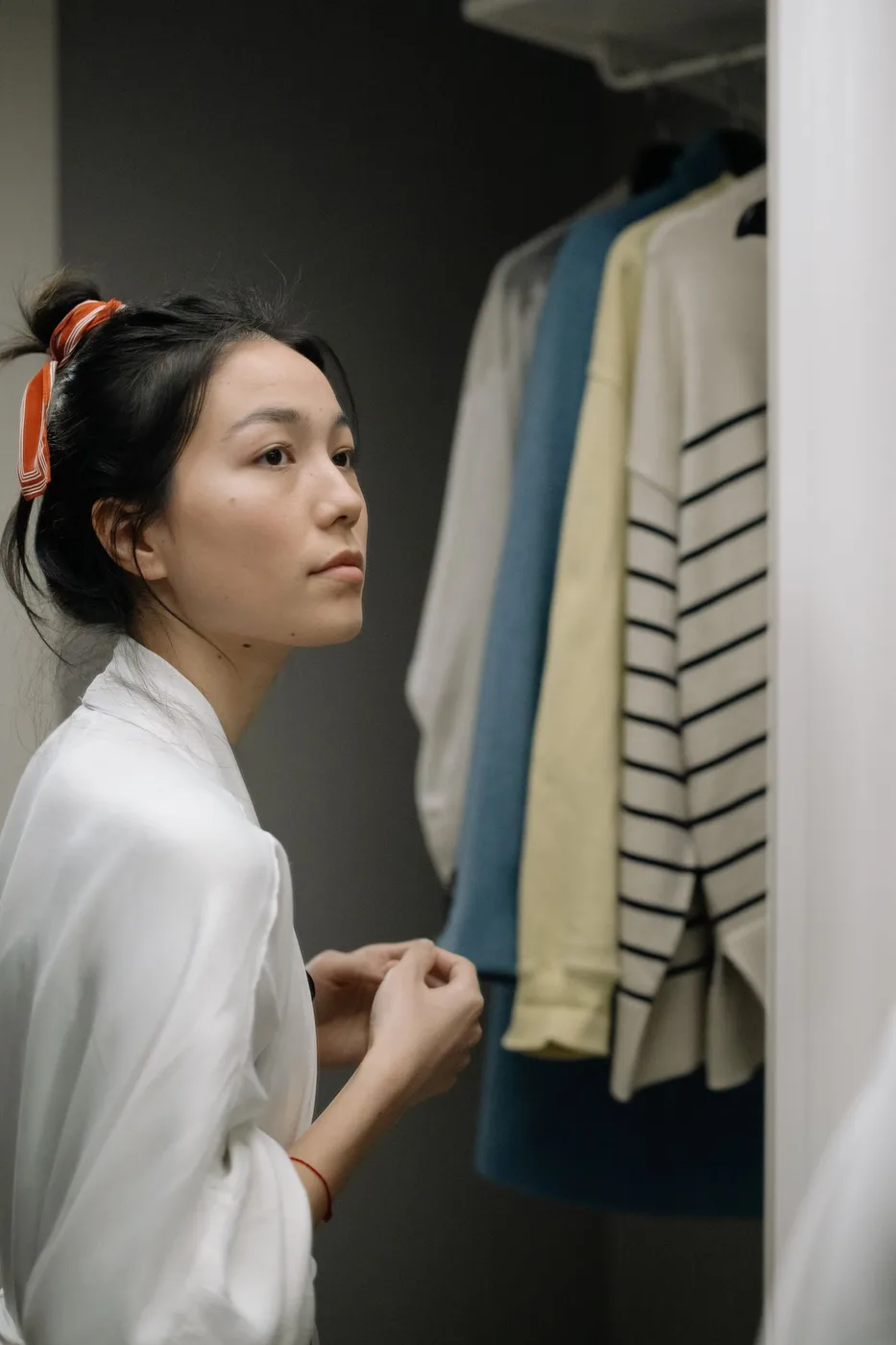
Editorial stock photograph · Source and photographer. Styling illustration; no product endorsement implied.
A wardrobe decision can remain unresolved for a sensible reason. You may need product information, an appropriate repair opinion or a clearer understanding of the garment’s role. Give that uncertainty a defined pause rather than forcing an immediate keep-or-discard answer. The useful pause preserves the actual question and the item’s appropriate care, without allowing indefinite storage to hide what remains undecided.
Describe the uncertainty precisely
Identify the garment and write the question you genuinely need to answer. “Confirm whether this closure needs repair” is clearer than “sort jacket.” Separate a visible observation from a proposed solution so the note does not quietly become an alteration instruction.
Keep available product information with the reference. Do not assign a maker, material or care method from appearance solely to complete the record. An honest gap is more useful than a confident answer borrowed from another garment.
Choose an appropriate temporary place
Follow relevant guidance for the garment’s handling and storage. A decision pause does not remove its ordinary needs. Keep the item distinct from clothing ready to wear if an unresolved task affects its current role.
Do not let a decorative rail or spare chair become a collection of mixed statuses. Choose a modest arrangement that preserves identity without spreading belongings across unrelated household tasks. Shared space benefits from a clear explanation of what is paused and why.
Name a real next step
The next action might be reading retained information, asking an appropriate service a specific question or trying a familiar outfit in a suitable space. Keep the action tied to the actual uncertainty rather than inventing a large wardrobe project.
If another person is involved, agree on the role they genuinely accept. A task note should not assign invisible responsibility. Clear ownership can make a modest pause more useful than an elaborate plan based on assumptions about somebody else’s time.
Keep alternatives available
Review existing suitable clothing for immediate needs while the decision remains open. You do not have to make the uncertain garment serve tomorrow’s outfit to prove it is worth keeping. Another familiar piece can support the day without settling the longer decision.
Avoid turning the pause into automatic permission for a replacement purchase. First understand what question the original garment raises. A shopping decision can remain separate, with its own practical purpose and information needs.
Review when useful evidence is available
Return to the item when the relevant information or appropriate opportunity arrives. Update the question if the situation changes. Remove a completed task from the active pause so an old note does not continue governing the garment.
The outcome may be a useful wearing role, an appropriate repair decision or a considered next step outside the wardrobe. Keep that outcome honest and specific. A defined pause protects options while preserving care, identity and real action, allowing a wardrobe edit to move thoughtfully without pretending every uncertainty deserves an immediate irreversible answer.
Related reading
A Closet Edit Without the Rush to Throw Things Away, When a Small Trouser Alteration Is Worth Considering.
Check your wardrobe first, note the gap you want to fill, then compare fabric, fit, care instructions and the retailer’s current return terms.
Explore our retailer directory →