
What to Do When Someone You Love Passes: Etiquette and Support
I recently lost a dear friend, and it’s had me thinking about how we show up for each other in times of loss. Funerals and celebrations of life can feel overwhelming to navigate, especially as we get older and find ourselves attending them more often. Do you go? Do you send flowers? What do you say when no words feel quite right? None of it feels simple when your heart is heavy.
What I’ve learned over the years is that it isn’t about doing everything perfectly. It’s about presence—whether that means sitting quietly in the pew, sending a card, or making a call weeks later when the loneliness sets in. However small, those gestures matter. They remind us we’re not alone.

Should You Attend the Funeral or Celebration of Life?
When you hear of someone’s passing, the first question is often whether you should attend the service. The answer usually comes down to your relationship with the person or their family.
- If you were close: Your presence is a comfort. Even if you do not know what to say, simply showing up speaks volumes.
- If you knew them casually but care about the family, Attending is still thoughtful. It shows respect for the person’s life and lets the family know they are not alone.
- If you cannot attend: Life does not always make it possible. In that case, send a note, flowers, or a donation in their memory to acknowledge their loss.
As we age, we often balance multiple responsibilities such as caring for parents, supporting children, or managing health. If travel or timing prevents attendance, it does not mean you do not care. A heartfelt note or phone call can still mean everything.
What’s the Difference Between a Funeral and a Celebration of Life?
Funerals today are not always the solemn black-clad services we remember. Some families hold a celebration of life in place of a funeral, while others opt for both. It might take place in a church, at a favorite park, in a community center, or even in the family’s backyard. Guests may be invited to wear brighter colors, bring photos, or participate in activities that represent the person’s passions. The tone may differ, but the intention is the same: honoring the person in a way that reflects who they were.
It is perfectly acceptable to ask ahead what the service will be like so you can prepare. Whether traditional or more modern, your presence and respect remain the most important gestures.
Do You Send Flowers?
Flowers are a long-standing tradition, but they are not always expected. Here are some things to consider:
- Check the obituary: Families often specify whether they prefer flowers or donations.
- Religious or cultural preferences: Some traditions do not emphasize flowers, so respect those wishes.
- If in doubt: A simple bouquet or plant delivered to the home after the service is a gentle way to let the family know you are thinking of them.
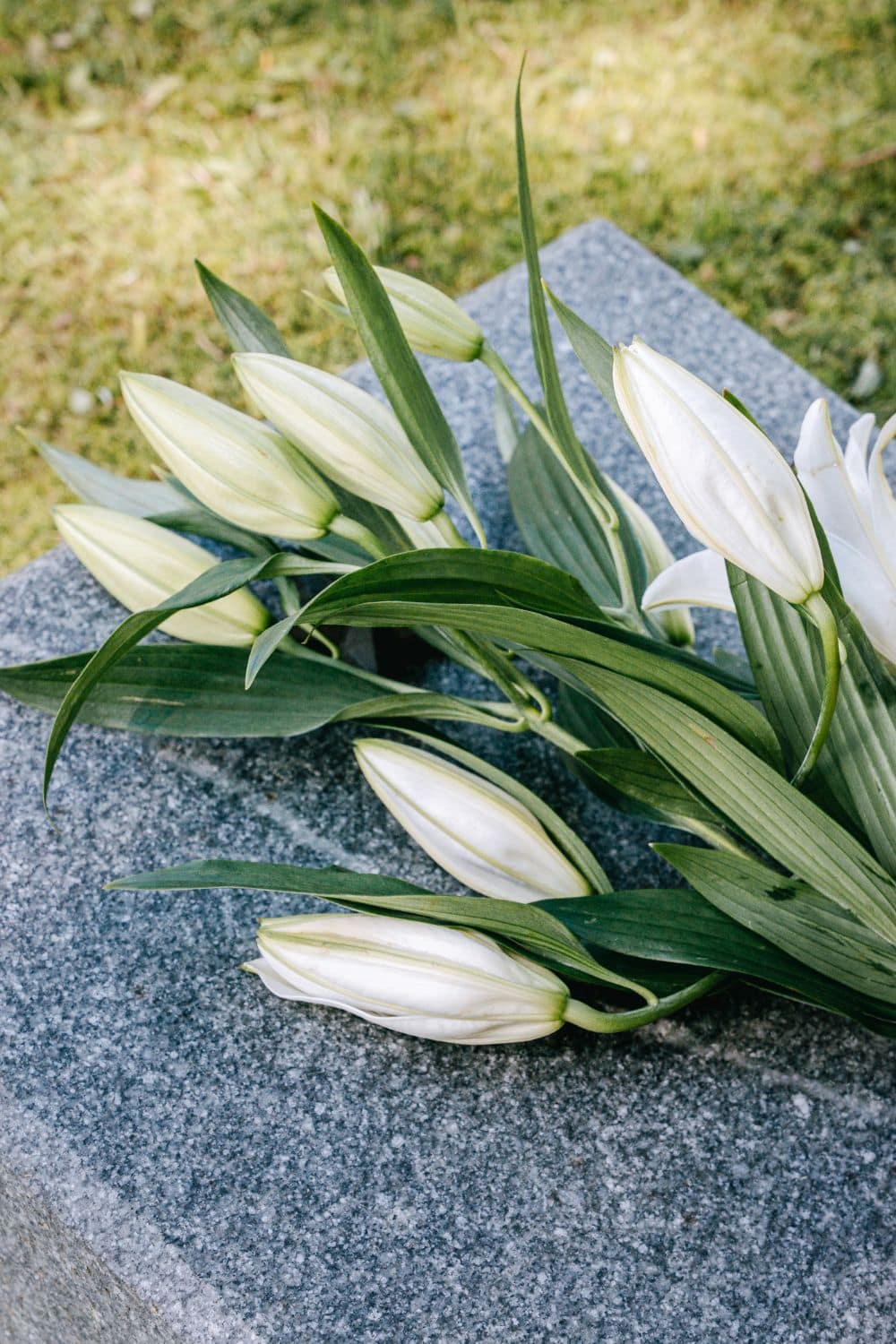
Specific Flower Options
- Lilies: Often considered the traditional funeral flower because they symbolize the restored innocence of the soul.
- Roses: White roses represent reverence and humility, while pink roses express gratitude and appreciation.
- Orchids: A living orchid plant is long-lasting and symbolizes eternal love.
- Hydrangeas: A potted hydrangea can be planted later in a garden as a lasting memory.
- Peace Lily Plant: A common sympathy gift because it can be kept indoors as a reminder of ongoing support.
Trusted Florist Sources
- Local florists: Ordering locally ensures your arrangement is fresh and timely, and many families appreciate supporting small businesses.
- Online services like 1-800-Flowers or Teleflora: These can be helpful if you live far away. Many of them offer same-day delivery.
- Retailers like Costco and Trader Joe’s: Affordable and high-quality options if you prefer to bring flowers in person.
Donations in memory of the person have become increasingly common. If the family designates a charity, contributing there is one of the most meaningful ways to honor the individual.
What to Say at a Funeral (and What Not to Say)
Knowing the right words can feel impossible. The truth is, nothing you say can fix the loss, but a few words of kindness matter.
Things you might say:
- I am so sorry for your loss.
- I will miss her laugh. (Sharing a specific memory can be comforting.)
- You are in my thoughts.
Things to avoid:
- When talking about what not to say: If the sentence starts with ‘At least…’—stop. Nothing good ever follows that.
- Trying to explain the loss or offer solutions.
Sometimes silence and a hug communicate far more than words.
How to Honor the Person Who Passed
Honoring someone does not end when the service does. In fact, some of the most meaningful gestures happen afterward.
- Share stories: Keep talking about them. Mention their name, their quirks, and the things that made them special. Hearing their loved one’s name keeps their memory alive.
- Remember important dates: Birthdays, anniversaries, or the anniversary of their passing can be especially hard for family members. A quick call, card, or text on those days lets them know you remember too.
- Do something they loved: Plant their favorite flowers, cook their signature recipe, or donate your time to a cause they cared about.
- Include them in conversation: A casual “She would have loved this” goes a long way.
Supporting Loved Ones After the Funeral
Grief does not end when the service is over. In fact, it often gets harder once the crowds fade. This is where your support can make the most difference.
- Check in regularly: Do not worry about bothering them. A simple “I was thinking about you today” is often exactly what they need.
- Offer practical help: Drop off a meal, mow the lawn, or run an errand. People often do not know how to ask for help, but small actions speak loudly.
- Be patient: Grief does not follow a timeline. Some people seem fine after a few weeks, while others struggle for years. Stay open and understanding.
As we age, we often become the steady presence for others. We are the people who remember, who check in, and who keep connections alive. It is one of the gifts of growing older: we understand how fleeting time is, and we know how important it is to hold each other close.
What if You Are the One Grieving?
Sometimes, you are not just supporting someone else. You are living through the loss yourself. In those moments, give yourself grace. Accept help when it is offered. Let others sit with you in the hard moments.
Celebrations of life are a reminder that we are meant to be part of a community. Allow yourself to lean on it.
Frequently Asked Questions
What should I wear to a funeral or celebration of life?
A funeral usually calls for dark, subdued clothing that does not draw attention away from the purpose of the day. A celebration of life may be more relaxed, but it is always best to dress respectfully. If the family requests a certain color or attire to reflect the person’s personality, it is appropriate to follow their wishes.
If you are wondering more specifically about what to wear, I’ve put together a full guide here: What to Wear to a Funeral or Memorial Service.
Should I bring food to the family?
Food is almost always welcome, especially in the days following a service. If you’re not sure, you can ask a family member or close friend what would be most helpful. Meals that are easy to reheat or freeze are often appreciated.
How long after the funeral should I check in?
There is no set rule. Checking in within the first week is thoughtful, but the most meaningful gestures often come weeks or even months later, after the initial rush of support has faded.
Is it appropriate to send a card even if I did not know the person well?
Yes. Sending a sympathy card shows care and respect. A simple message such as “I am thinking of you and your family” can mean a lot, even if you did not know the person closely.
Why Presence Means More Than Perfection
As I’ve learned through losing people I’ve loved, grief doesn’t end when the service does. Some of the most meaningful comfort comes later—a phone call on a hard anniversary, a story shared over coffee, or simply hearing their name spoken aloud. Those small gestures matter more than anything else.
It isn’t about saying the perfect words or following every bit of etiquette exactly right. What matters is presence—showing up with kindness, however you can. Love doesn’t stop when life does, and the steady care we offer each other afterward is what carries us through.
Have you ever received a gesture during a time of grief that has stayed with you? I’d love to hear what felt most comforting
Hi Jennifer,
I cannot tell you how much this column meant to me. You have completely covered what is most appreciated when someone you love dies. Thank you so much.
I’m so glad this was helpful Ann.
What I have found as a comfort are friends that drop a note on my husband’s birthday, our anniversary or just when they remember a funny story. It amazes me how lucky I am to have a circle of folks that are kind even 2 years after my husband passed.
You are fortunate…what lovely friends
I’ve lost so many loved ones over the years but last year I lost my brother suddenly. We were the last ones left out of four. I thought I had been through so much grief that I would handle this too. I was so surprised to realize that not having any immediate family left has saddened be beyond what I expected. I’ve really leaned on my children and mostly all my cousins. Just someone who has known you your entire life is special. So sorry for the loss of your friend.
I’m so sorry for your loss Rosemary! Sending hugs and prayers your way
There are good reasons not to have funerals, and good reasons not to attend them. Oftentimes, the deceased person has requested no funeral. This has become more common over the past five years. We can find our own grieving rituals and ways to remember without the burden of societal expectations. No judgment either way.
That was a very meaningful message. Thank you for using your own sadness to offer tips and suggestions to support others in their own losses.
I recently attended a celebration of life. There were many photos. My friend had 7 children. I spoke to each of them and made a comment about various photos. It led every single one of them to tell me a little story about the photo. It was heartwarming.
That’s lovely
Thank you for the kind reminders.
When I lost my husband 22 years ago, the comment I remember most and has stayed with me all these years was from my 4 year old grandson. After the funeral, I flew across country with my son to meet my new 6 day old granddaughter. We arrived late. When my grandson saw me awake in the morning, he came and sat on the bed with me, took my hand and simply said “I am going to miss Papa.”
Later that year on a flight to see me, he was glued to the plane window. When the flight attendant commented on it, he told her he was looking for his Papa in heaven.
We continue to keep his memory alive by telling stories about him when we are together and celebrating his birthday each year.
Thank you so much for sharing Nancy! Such a precious memory.
Thank you for this post. More and more, this is relevant.
So helpful today. The older I get, the more funerals or Celebrations I attend. Thank you.
Linda H
Thank you, Jennifer. I am going through a time when this post is especially appropriate. And I think a lot of what you say applies when you have friends struggling with issues like cancer or other illnesses or injuries.
I agree. Sorry you’re dealing with this.
Thank you for sharing this. I lost my husband suddenly a year ago and it’s still hard some days. I have a wonderful circle of family and friends who still check in on me and talk about my husband. It’s taught me to be there for those who have lost someone. I keep busy and have a full life but it’s not the same and I appreciate my supportive friends so much! Great tips.
I’m so sorry about your husband.
Thank you for this post. I thought your suggestions were right on target. As we age, funerals and celebrations of life are more common than weddings. Your advice was thoughtful, especially the ones about what NOT to say.
As a Haematology /Oncology and later a Palliative Care Nurse, I have dealt with death on a daily basis. I worked on a small ward where we
would become very close to some of the patients, to the point, we would attend their funeral. The families would always come over and thank us (not that we did it for thanks). But, as a society, we find it hard to talk about death, so when we are personally affected, many people struggle with how to interact with the grieving person. I think Jennifer has given some great suggestions, both sensitive and practical. When one of my brothers died, one of my colleague’s little child drew me a card. It was a beautiful gesture and still have it, over twenty years later.
Thank you Susan
Presence. Everything you said in this article is very good. We lost our teenage son in an automobile accident 25 years ago. I understand that some people just don’t know what to say but saying nothing is the worst. A neighbor I carpooled our daughters with never acknowledged my son’s death. Others also. That hurt so much. On the other side, I get a card from a friend every year on the anniversary date. Another suggestion: if you have a sweet or funny memory of the person, share it in your card. I did this recently when an acquaintance’s husband died. She wrote to thank me. Thank you for this post Jennifer.
Thank you Kathy. I’m so sorry about your son.
Hi Kathy and all
My deepest sympathy to you-I, too lost my son, and there just is nothing like it, is there?
The grief of losing a child-no matter the age, is something we carry-not get over or get through. We just learn to live with it. We try our best at least. Our giref is not measured in time passed-we will grieve as the loss was yesterday for the rest of our days.
My advice in the grief journey? Cards are cherished-flowers all die at the same time after the loss-and it is so odd to throw them all away-I cannot explain-it mede me feel worse ( and if you drop flowers by-make sure to include a vase), but a card with a nice note about the loved one, a gift card for a fast food or coffee place, a photo of the loved one that perhaps the grievers had never seen before. Social media posts on their birthday or “death-anniversary” Just don’t forget them-that is what we all wish-that they are remembered, and their name still spoken of.
I am so sorry Sandy. I can not imagine a more devastating loss.
Great tips! Especially sources for the flowers. I DO not recommend the ads with the obituary. I did this once and the flowers never arrived. That local funeral home advised me to use local florists. google make it easy to find local ones, or the funeral home can advise.
Thank you this post was full of love and common sense. My best friend is going through a terrible time with her daughter fighting breast cancer. Keeping in touch with her and supporting her as best I can while not overstepping
I’m so very sorry.
This was a very important and thoughtful post. Thank you for the reminders, and I am very sorry for the loss of your friend.
Mona
Thank you Mona
Thank you for such a thoughtful compilation of ideas. It is always a sad and sometimes surprising event, and others reaching out is definitely appreciated. Kindness will be remembered.
I can’t express how much I appreciated your thoughts and advice for dealing with this event in our lives that we all will go through.