
What to Do When Someone You Love Passes: Etiquette and Support
I recently lost a dear friend, and it’s had me thinking about how we show up for each other in times of loss. Funerals and celebrations of life can feel overwhelming to navigate, especially as we get older and find ourselves attending them more often. Do you go? Do you send flowers? What do you say when no words feel quite right? None of it feels simple when your heart is heavy.
What I’ve learned over the years is that it isn’t about doing everything perfectly. It’s about presence—whether that means sitting quietly in the pew, sending a card, or making a call weeks later when the loneliness sets in. However small, those gestures matter. They remind us we’re not alone.

Should You Attend the Funeral or Celebration of Life?
When you hear of someone’s passing, the first question is often whether you should attend the service. The answer usually comes down to your relationship with the person or their family.
- If you were close: Your presence is a comfort. Even if you do not know what to say, simply showing up speaks volumes.
- If you knew them casually but care about the family, Attending is still thoughtful. It shows respect for the person’s life and lets the family know they are not alone.
- If you cannot attend: Life does not always make it possible. In that case, send a note, flowers, or a donation in their memory to acknowledge their loss.
As we age, we often balance multiple responsibilities such as caring for parents, supporting children, or managing health. If travel or timing prevents attendance, it does not mean you do not care. A heartfelt note or phone call can still mean everything.
What’s the Difference Between a Funeral and a Celebration of Life?
Funerals today are not always the solemn black-clad services we remember. Some families hold a celebration of life in place of a funeral, while others opt for both. It might take place in a church, at a favorite park, in a community center, or even in the family’s backyard. Guests may be invited to wear brighter colors, bring photos, or participate in activities that represent the person’s passions. The tone may differ, but the intention is the same: honoring the person in a way that reflects who they were.
It is perfectly acceptable to ask ahead what the service will be like so you can prepare. Whether traditional or more modern, your presence and respect remain the most important gestures.
Do You Send Flowers?
Flowers are a long-standing tradition, but they are not always expected. Here are some things to consider:
- Check the obituary: Families often specify whether they prefer flowers or donations.
- Religious or cultural preferences: Some traditions do not emphasize flowers, so respect those wishes.
- If in doubt: A simple bouquet or plant delivered to the home after the service is a gentle way to let the family know you are thinking of them.
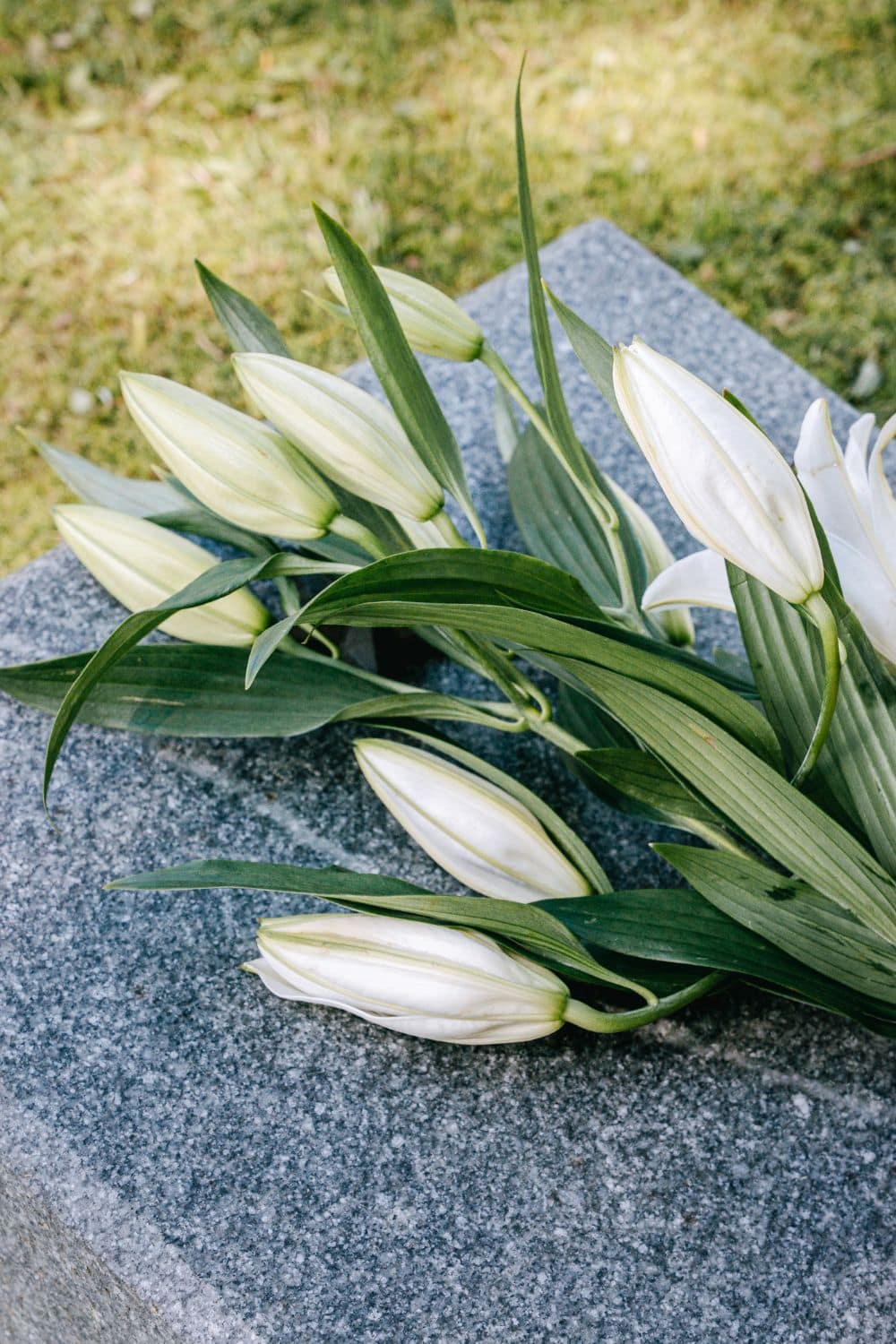
Specific Flower Options
- Lilies: Often considered the traditional funeral flower because they symbolize the restored innocence of the soul.
- Roses: White roses represent reverence and humility, while pink roses express gratitude and appreciation.
- Orchids: A living orchid plant is long-lasting and symbolizes eternal love.
- Hydrangeas: A potted hydrangea can be planted later in a garden as a lasting memory.
- Peace Lily Plant: A common sympathy gift because it can be kept indoors as a reminder of ongoing support.
Trusted Florist Sources
- Local florists: Ordering locally ensures your arrangement is fresh and timely, and many families appreciate supporting small businesses.
- Online services like 1-800-Flowers or Teleflora: These can be helpful if you live far away. Many of them offer same-day delivery.
- Retailers like Costco and Trader Joe’s: Affordable and high-quality options if you prefer to bring flowers in person.
Donations in memory of the person have become increasingly common. If the family designates a charity, contributing there is one of the most meaningful ways to honor the individual.
What to Say at a Funeral (and What Not to Say)
Knowing the right words can feel impossible. The truth is, nothing you say can fix the loss, but a few words of kindness matter.
Things you might say:
- I am so sorry for your loss.
- I will miss her laugh. (Sharing a specific memory can be comforting.)
- You are in my thoughts.
Things to avoid:
- When talking about what not to say: If the sentence starts with ‘At least…’—stop. Nothing good ever follows that.
- Trying to explain the loss or offer solutions.
Sometimes silence and a hug communicate far more than words.
How to Honor the Person Who Passed
Honoring someone does not end when the service does. In fact, some of the most meaningful gestures happen afterward.
- Share stories: Keep talking about them. Mention their name, their quirks, and the things that made them special. Hearing their loved one’s name keeps their memory alive.
- Remember important dates: Birthdays, anniversaries, or the anniversary of their passing can be especially hard for family members. A quick call, card, or text on those days lets them know you remember too.
- Do something they loved: Plant their favorite flowers, cook their signature recipe, or donate your time to a cause they cared about.
- Include them in conversation: A casual “She would have loved this” goes a long way.
Supporting Loved Ones After the Funeral
Grief does not end when the service is over. In fact, it often gets harder once the crowds fade. This is where your support can make the most difference.
- Check in regularly: Do not worry about bothering them. A simple “I was thinking about you today” is often exactly what they need.
- Offer practical help: Drop off a meal, mow the lawn, or run an errand. People often do not know how to ask for help, but small actions speak loudly.
- Be patient: Grief does not follow a timeline. Some people seem fine after a few weeks, while others struggle for years. Stay open and understanding.
As we age, we often become the steady presence for others. We are the people who remember, who check in, and who keep connections alive. It is one of the gifts of growing older: we understand how fleeting time is, and we know how important it is to hold each other close.
What if You Are the One Grieving?
Sometimes, you are not just supporting someone else. You are living through the loss yourself. In those moments, give yourself grace. Accept help when it is offered. Let others sit with you in the hard moments.
Celebrations of life are a reminder that we are meant to be part of a community. Allow yourself to lean on it.
Frequently Asked Questions
What should I wear to a funeral or celebration of life?
A funeral usually calls for dark, subdued clothing that does not draw attention away from the purpose of the day. A celebration of life may be more relaxed, but it is always best to dress respectfully. If the family requests a certain color or attire to reflect the person’s personality, it is appropriate to follow their wishes.
If you are wondering more specifically about what to wear, I’ve put together a full guide here: What to Wear to a Funeral or Memorial Service.
Should I bring food to the family?
Food is almost always welcome, especially in the days following a service. If you’re not sure, you can ask a family member or close friend what would be most helpful. Meals that are easy to reheat or freeze are often appreciated.
How long after the funeral should I check in?
There is no set rule. Checking in within the first week is thoughtful, but the most meaningful gestures often come weeks or even months later, after the initial rush of support has faded.
Is it appropriate to send a card even if I did not know the person well?
Yes. Sending a sympathy card shows care and respect. A simple message such as “I am thinking of you and your family” can mean a lot, even if you did not know the person closely.
Why Presence Means More Than Perfection
As I’ve learned through losing people I’ve loved, grief doesn’t end when the service does. Some of the most meaningful comfort comes later—a phone call on a hard anniversary, a story shared over coffee, or simply hearing their name spoken aloud. Those small gestures matter more than anything else.
It isn’t about saying the perfect words or following every bit of etiquette exactly right. What matters is presence—showing up with kindness, however you can. Love doesn’t stop when life does, and the steady care we offer each other afterward is what carries us through.
Have you ever received a gesture during a time of grief that has stayed with you? I’d love to hear what felt most comforting
Jennifer, thank you for this post. Your advice is excellent. However, I would like to offer a caveat about giving flowers or houseplants. If the grieving family has a pet, please opt for one that is pet-safe. Lilies of every type and many houseplants are poisonous to both dogs and cats. You can easily find out which ones are problematic with a Google search.
Great point!
Although I already left a comment a few days ago, reading the subsequent comments about the choice to NOT have a funeral, calling hours, memorial service, celebration of life etc. reminded me of a lesson I learned when my brother died of covid before the vaccines. There was a funeral, on an extremely cold December day, and I was amazed at how crowded the church was. But there could be no calling hours. No receiving line, no hugs from friends/family, no in person condolences or sharing of stories. That experience demonstrated to me how important the togetherness is to the healing process and the “community of love and memory”. But everyone is different and we all grieve and heal differently, so I can respect those who do not want a gathering.
My wonderful female friend her husband passed, 3 yrs now. she is a strong women, but not now still. After this happened. I started sending a card b4 he passed to one for her, then later one for him. shopping for a special one for each. just when ever. One day I found a blue mountain one for her husband, He really love it. both christians. When he passed. I continued. to this day 3 yrs still .Yes I look for a special card. I call tho not too ofter but make it a good call…He was her lifeline. So I know that and still put that line out to her. Its amazing. how even strong people need help…..but she was my Mentor in christian learning, and always a friend.and so I do it.It makes a world of difference. just saying…
That’s so lovely of you Paula
Thank you for all your advise, it was very helpful
I’m sorry that you lost a dear friend.
My mother was the first very close person in my life to die. I hadn’t realized until that time how much getting sympathy cards would mean. I always sent them when someone passed. At her passi, the cards I received were are great comfort. The advice you provided will be very helpful.
Thank you.
My oldest grandchild passed away 7 years ago and that is something your family never really “gets over”. The kindest things said for me were just “I am so sorry and I’m here for you”.
People asking questions about what happened at the memorial service was very upsetting, it was too soon to relive what happened.
Thank you for sharing all this information. It’s always an upsetting time..
I’m so sorry for your loss Beth.
Hi Jennifer,
Thanks for the lovely and important advice. I’m so sorry for your loss. Just being there to support grieving friends and family is key. Never be afraid to talk about the person we’ve lost, I find most everyone appreciates this, now and always. Remember birthdays and special dates down the road. I’ve lost both my folks and my brother. Worst things I heard “They’ve gone on to a better place”, or “I’d be happy if my mom lives to 91.” One of the kindest comments about losing mom, “of course it hurts, she was 91 and you got to love her that much longer.” Never ever say to someone “it’s time to move on.” Grief has no timetable. I recall my mom breaking down over 40 years after she lost her grandmother who raised her, as if it just happened. Always allow yourself the grief you need. Take care.
Jennifer, your blog is exceptional in the wide range of pertinent and useful topics. I really appreciate your efforts and thoughtfulness in putting these posts together.
We often think of sending flowers during a time of loss, but I’ve found other ways to show I care. A very close friend lost her young, adult son unexpectedly, a few years ago. She received 14 bouquets of flowers! I didn’t know this when I decided to make her a “pamper-me” basket, instead. I filled a basket with the things I know she likes, such as a bath bomb, a scented candle, pretty soap, and a gift card to a coffee shop. (I gave it to her some weeks after, when she was ready to come for coffee and a visit—at her suggestion). She loved it and it was something she could enjoy in the weeks after the celebration of life and everyone had gone home.
My mom would offer to take her friends out for lunch, once they were ready to go out. It gave them the opportunity to connect and share their stories and grief. Anyway, just a couple of other ideas of how to support each other during a difficult time.
That’s a wonderful idea, Carolynn. Thanks for sharing with us.
Thank you Jennifer for all your suggestions. My family has always been so against funeral services. I flew to Florida to attend my father’s funeral in 1988. I spent four days with my mother which was very important to both of us. But when she passed in 1997, I couldn’t get a flight down there until two days after she died. My brother Richard was with her when she passed. She had prepaid for her cremation and to have her ashes spread out at sea. No funeral service at all. My brother went back to Michigan and I took a week off work and stayed in Florida and cleaned her house readying it for sale. My brother Tom and his wife Betty took care of the yard sale and the sale of the house. My brother Tom lived only a few miles from my mother. When Tom Passed, I wasn’t even told about it until 3 months later. My brother Richard wasn’t told either. Of course I lived in Colorado and he lives in Michigan. Sometimes it is hard to know what to say when a family like ours lives such separate lives.
Wow, Sydney, I’m so very sorry!
Jennifer, what a wealth of thoughtful advice! I recently lost my dear sister and experienced much of what you’ve said, the appropriate and otherwise. And I sympathize when saying the wrong thing just pops out. I know folks are trying their best to express their feelings. However, never say this to someone. I lost a good friend several years ago in a car accident and someone said to me, “Well, she was old anyway.” I was a shocked that someone would say that. Then what do I say to that??
After my sister’s death, a dear friend sent me a wind chime with a wonderful poem on it about sisters. So I found it on Amazon and sent one about mothers to each of my nieces. It was a very appreciated gift.
I’m so sorry about your sister, Susan. Windchimes are a lovely reminder
Really good post of so much excellent and important information to be mindful of and take into consideration.
Thank you so much for sharing all of this.
Thank you for this kind and helpful post. It is much appreciated:)
What a wonderful blog Jennifer.
I lost my husband a year ago and it made me realize how important contact with the grieving person, through cards and phone calls really is. It is hard to know what to say, but you have to be brave, and that is exactly what I think of the peeps who called me once in awhile to see how I was doing. On the anniversary of his death I went through all the cards and memorial donations and it warmed my heart.
I’m so sorry about your husband Dorie.
I really appreciated today’s post. Unfortunately I have experienced so much of this. Several years ago, we lost both our adult sons within the space of 14 months due to sudden serious health issues. It was and still is devastating. You are right, NOTHING good can come after “at least….”. I heard so many hurtful things from well meaning friends. Probably the worst was ” what are the odds that both sons would die of that?”. I was able to forgive them when I realized they simply were in shock too and didn’t know what to say. What is good and memorable is to hold my hand to give me strength- no words needed. Some of the most touching cards and calls I received came a few weeks after the services. These dear friends gave us a moment to breathe, then called to let us know how much they loved our sons. That’s what a grieving mom wants to hear- how loved their sons are and how they impacted the lives of others.
I’m incredibly sorry Sharon! That is simply devastating beyond belief! Sending hugs your way
Thank you for this post. I know that sometimes people stay away because they don’t know what to say. And people need to know that their loved one has not been forgotten. My husband and I have disagreed on this, he thinks it’s better not to mention the deceased so as not to bring up sad memories. I think the family never forgets the loss, they just deal with it better. I sometimes make a note on next year’s calendar to send a card to the surviving friend as the anniversary of death approaches. And when my brother died of covid before the vaccine, a friend who had survived a very serious covid hospitalization (the sickest covid patient the Cleveland Clinic had seen) sent me wind chimes. It made such an emotional impact on me that I now carry on that tradition with friends who have lost a spouse.
I’m so sorry Sheila! Wind chimes are a special rememberance.
I have had friends pass over the last few years, and their family has done nothing in the way of a funeral or service. It’s been hard because it feels like there wasn’t commemoration of that person and their life.
I recently lost a good friend and her family lives out of the area and they are not planning any sort of funeral or celebration of life. I was wondering if you think it would be inappropriate for me to have a small informal celebration of life for my friend, since I also know many of her friends?
I think it would be a lovely idea and totally appropriate. She was your friend and you want to celebrate her life! I’d say yes!
Thankyou! I’ve been struggling with the idea.
Jennifer, I’m sorry that you lost a close friend recently. At this stage in our lives, it’s important to let those that are close to us know that we love them every chance we get.
Agreed! In fact, that was one of the last messages we all got from her reminding us of just that.
Great advice thank you. While not a loss of life many of my friends are going through a health crisis or a declining spouse. I buy cards and that I think might make them smile or offer encouragement to send randomly. I have been told they were helpful and meant a lot.
It’s lovely to recieve a card. People seem to forget them these days.
I have lost both my sisters – the college roommate of one of my sisters continues to send me emails every year on my sister’s birthday, which I appreciate so very much! It is also a time to catch up a bit with her as well. I make a contribution to a charity every year on my sisters’ birthdays – I can no longer give them a gift, but I can give a gift in their honor and memory, and I do the same for my mother, father, and brother-in-law.
That’s such a lovely gesture! I’m so sorry for your loss.