The Best Sleeve Lengths for Women Over 50
Most women don’t hate their arms because of the shape. They hate them because the skin has changed. It gets softer, saggier, or crepier, and suddenly sleeves that never bothered you before become the first thing you notice. I understand because I’ve had the same thoughts.
But here’s what I’ve learned: it’s often not your arms at all. It’s where the sleeve ends. I also shared Can You Wear Sleeveless Tops Over 50? Yes, and Here’s How.
A sleeve that stops at the widest part of your upper arm draws attention there. One that ends at a narrower part can completely change the way your arm looks, without asking you to lose weight or hide under long sleeves.
Once you understand that, shopping gets a whole lot easier.
Why Sleeve Length Matters More Than You Think
Sleeves create a stopping point for the eye. If they end at the widest part of your arm, that’s where the attention goes. If they end at a narrower spot, like just below the elbow or at the wrist, the whole arm usually looks better.
That’s why two tops can fit exactly the same through the body but look completely different once you put them on. Sometimes it isn’t the color, the neckline, or even the size. It’s the sleeve.
3/4 Length Sleeves: Why They Work
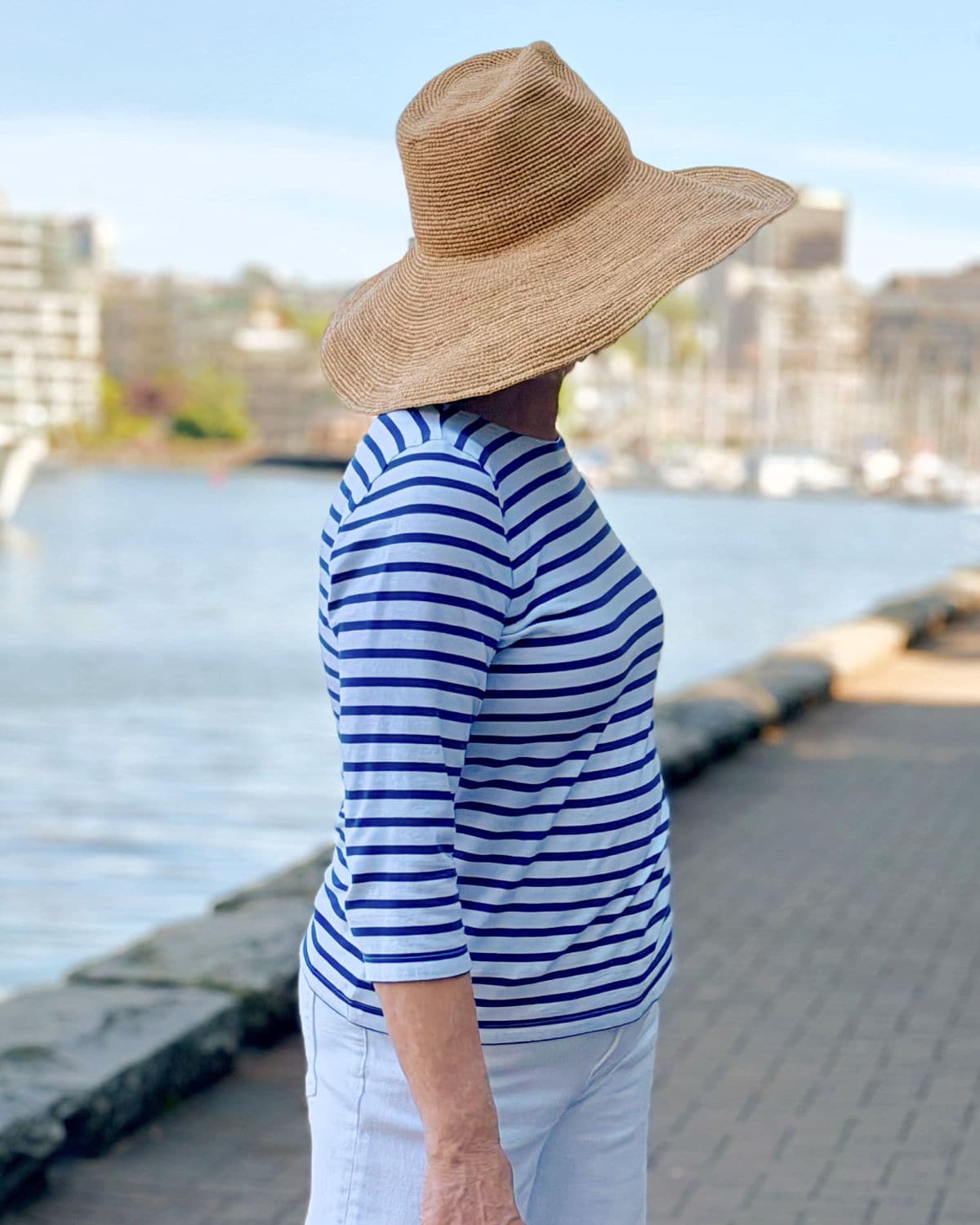
If I had to choose one sleeve length to recommend to most women over 50, it would be a 3/4 sleeve. It usually ends at the narrowest part of the forearm instead of the widest part of the upper arm, which is why it’s so flattering.
It also solves several common concerns at once. You get coverage over the upper arm and elbow, but your wrists stay visible, so the look doesn’t feel too covered up.
Another reason I like 3/4 sleeves is their versatility. They work with casual tees, striped tops, lightweight sweaters, linen shirts, and dresses. If you’re building a wardrobe, this is one sleeve length you’ll probably reach for again and again.
If you already own long-sleeve shirts that feel stiff or heavy, try pushing or scrunching the sleeves up to a 3/4 length. Sometimes that one small change makes the whole outfit look better, and you don’t have to buy anything new.
One thing to watch is where the sleeve actually lands. Not every brand cuts a true 3/4 sleeve, especially if you’re petite or have especially long or short arms. Ideally, it should hit between your elbow and wrist, where your forearm is narrowest.
More 3/4 sleeve tops:
👉 Scroll right to see more options in the widget.
Elbow-Length Sleeves
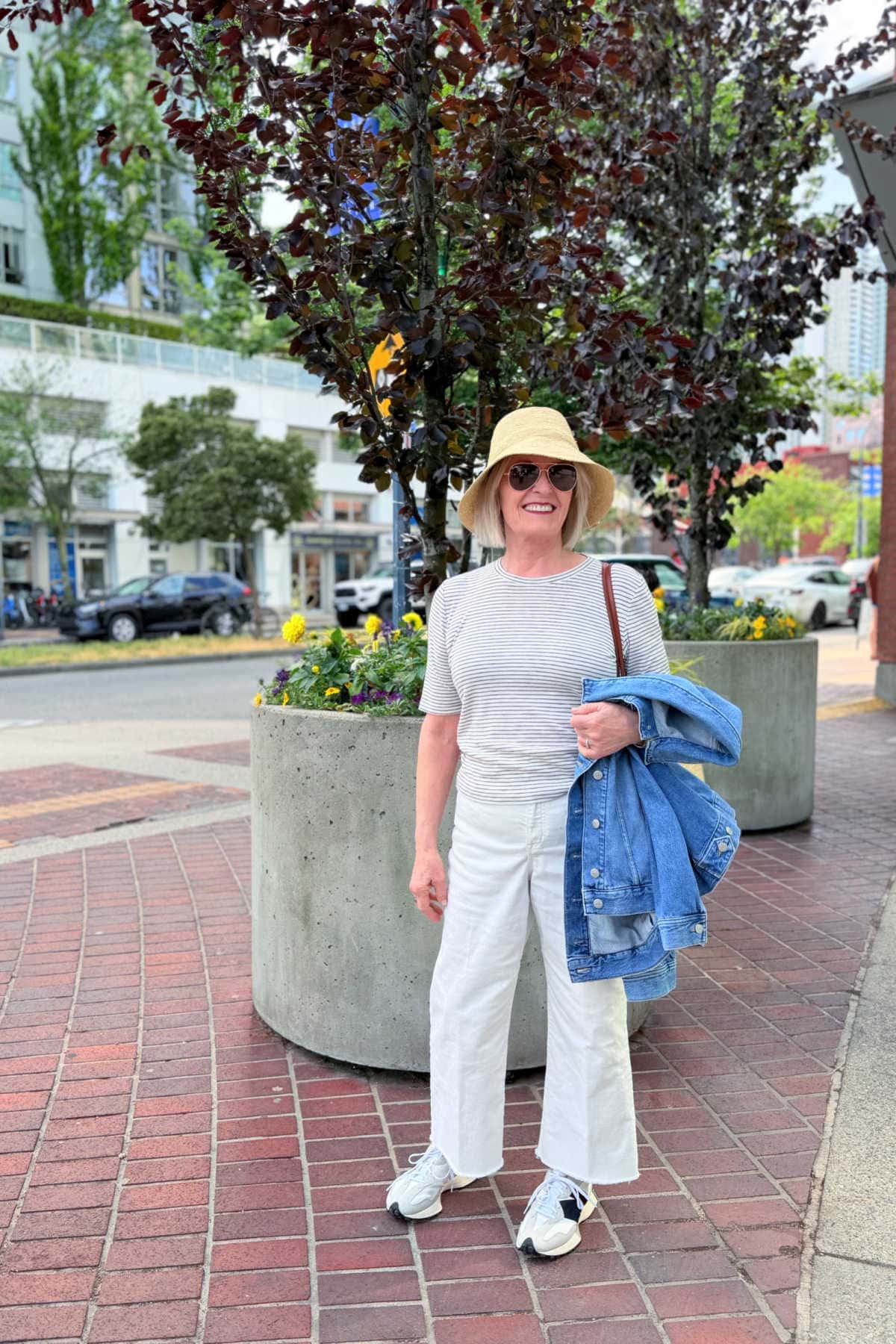
Elbow-length sleeves are another favorite of mine, especially in warm weather. They give you a little more coverage than a short sleeve without feeling hot or looking overly covered up.
The fit matters just as much as the length. If the sleeve is too tight, it clings to every bit of texture when you move. Too loose and boxy, and it can make your whole upper body look wider. The sweet spot is a sleeve that skims your arm without hugging it.
If you’re shopping online, check the product measurements or zoom in on the model. A sleeve described as “elbow-length” can vary quite a bit from one brand to another.
I’ve had the best luck finding elbow-length sleeves at Chico’s and Talbots, although they’re becoming easier to find in other brands, too.
More elbow-length sleeves:
👉 Scroll right to see more options
Short Sleeves: They’re Not The Enemy
This is where many women give up on short sleeves and decide their arms are the problem. Most of the time, they aren’t.
A standard short sleeve usually ends at the widest part of the upper arm, so that’s naturally where your eye goes. That’s the sleeve, not you.
Two things make a big difference. I always look for either a diagonal hem instead of one cut straight across, or a fuller or flutter sleeve with enough movement so it doesn’t cling. Both are much more forgiving than a basic T-shirt sleeve.
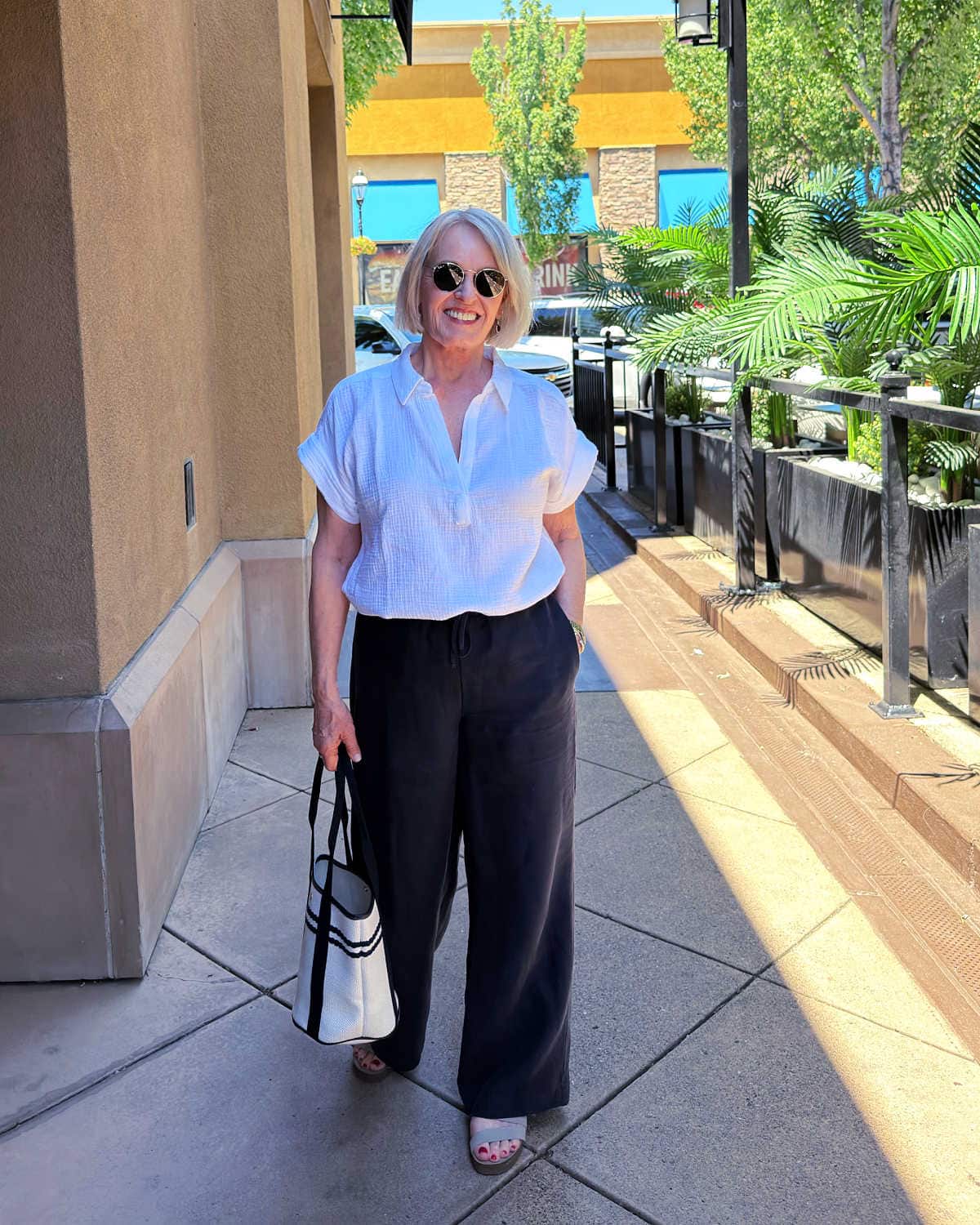
Cap sleeves aren’t my first choice when I’m trying to minimize my upper arms, since they draw attention to that area. That said, I still wear them from time to time when I love the rest of the garment. I just know they’re a style compromise I’m willing to make.
Sleeveless Tops: Is There an Age Limit?
No.
If you’re comfortable wearing sleeveless tops, there’s no reason to stop because you’ve had another birthday.
But I also know many women aren’t comfortable showing their arms anymore, and I don’t think it’s helpful when someone says, “Just wear whatever you want.” That’s easy to say when they aren’t the one feeling self-conscious.
If you’d like to wear sleeveless but want a little more coverage, look for wider shoulder straps rather than spaghetti straps. They’re usually more flattering, they balance the shoulder better, and they let you wear a regular bra without worrying about your straps showing.
Another option I rely on is adding a lightweight cardigan or wrap over a sleeveless dress or tank. You still get the coolness of a sleeveless outfit without feeling overexposed. It’s one of the reasons I keep so many lightweight layers in my wardrobe during the warmer months.

Don’t Forget The Armhole
Sleeve length isn’t the only detail that matters. Pay attention to the armhole, too.
If it’s cut too low, it can gape, show your bra, and add bulk under the arm. If it’s too high, it can feel restrictive every time you move.
Petite sizes often have shallower armholes, which can be a better fit even if you aren’t especially petite. If regular tops tend to gape under the arm or show your bra, it may be worth trying the petite version.
When you’re trying something on, don’t just stand in front of the mirror. Reach forward, lift your arms, and move around a little. A well-cut armhole stays in place and moves with you. A poorly cut one won’t.
Fabric Matters Too
Fabric matters, but not always in the same way. A soft, drapey fabric can skim the arm and feel easy, which is often what I want in a tee, blouse, or summer dress.
But stiff fabric isn’t automatically bad. In a short sleeve or jacket, it can add structure and keep the sleeve from clinging, which can be very flattering. The problem is stiffness in the wrong place, not stiffness itself.
The best test is simple: try it on and move. If the sleeve stands away in a clean, intentional way, that can work beautifully. If it sticks out awkwardly or pulls across the upper arm, leave it.
The Bottom Line
Sleeve length may seem like a small detail, but it can completely change the way a top or dress looks on you. Before you decide your arms are the problem, take a closer look at where the sleeve ends, how the armhole fits, and whether the fabric works with your body instead of against it.
You may be surprised to discover that you don’t need to hide your arms at all. Sometimes you just need a better sleeve.
Have you found a sleeve length that you always feel good wearing? I’d love to hear what works for you.
Thank you so much. I thought I was the only one who was aware of their arms as they age. Great tips.
Just found a solution for a sleeveless sweater that showed my bra under the arms. I bought a matching sports bra and wear that with the sweater. The sides of the bra look more like a matching tank under the sweater without having to actually wear a tank. Problem solved!
Great idea!
My big problem is rolling up the sleeves to make them 3/4 length. I just can’t do it. I wish there was a tutorial on this.
Try doing it before you put your shirt on. That’s easier.
Jennifer, here’s a tip. My dermatologist had a list of what actually works for those purple and bruised marks on your arms? I was getting them from just working in the garden or playing with my dogs! I started taking Rutin, a natural bioflavonoid for circulatory and vein support and the difference is night and day. I can now wear short sleeves without all of the purple marks!! It has made a very big difference in how I feel about sleeves, and although it doesn’t help with crepiness, at least I don’t have to cover the purple bruise marks on my arms anymore!
Thanks for letting me know. I will ask my doctor about it for me.
Thanks for the tip about carefully checking the sleeve lengths! Your posts are informative and so helpful; I appreciate all that I’m learning. Because I live in the high desert of SW Utah, I’ve gotten braver about wearing tank tops to stay comfortable in the heat. The ones I purchase from L.L. Bean have been the easiest to wear because the straps are cut wide enough to stay nicely in place and do not expose my bra straps. I wonder if “brave” is the right word? I feel like it suggests I’m being shy about my aging body. That’s the last thing I want to be seen as. As a retired professional nurse and geriatric care manager, I aim to debunk myths about aging.
Bravo, Christine!
Thanks for this post! I had never really given this much thought. Recently starting noticing that the cap sleeve and some short sleeve styles seem to be ill-fitting and this provides wonderful insight.
In 115 degree temps here in California, I wear sleeveless.
I would too!