Ask a Fitting Companion One Useful Question
Ask a fitting companion one useful question about the actual outfit, keeping personal preference and the desired feedback clear before a second opinion becomes a complete redesign.
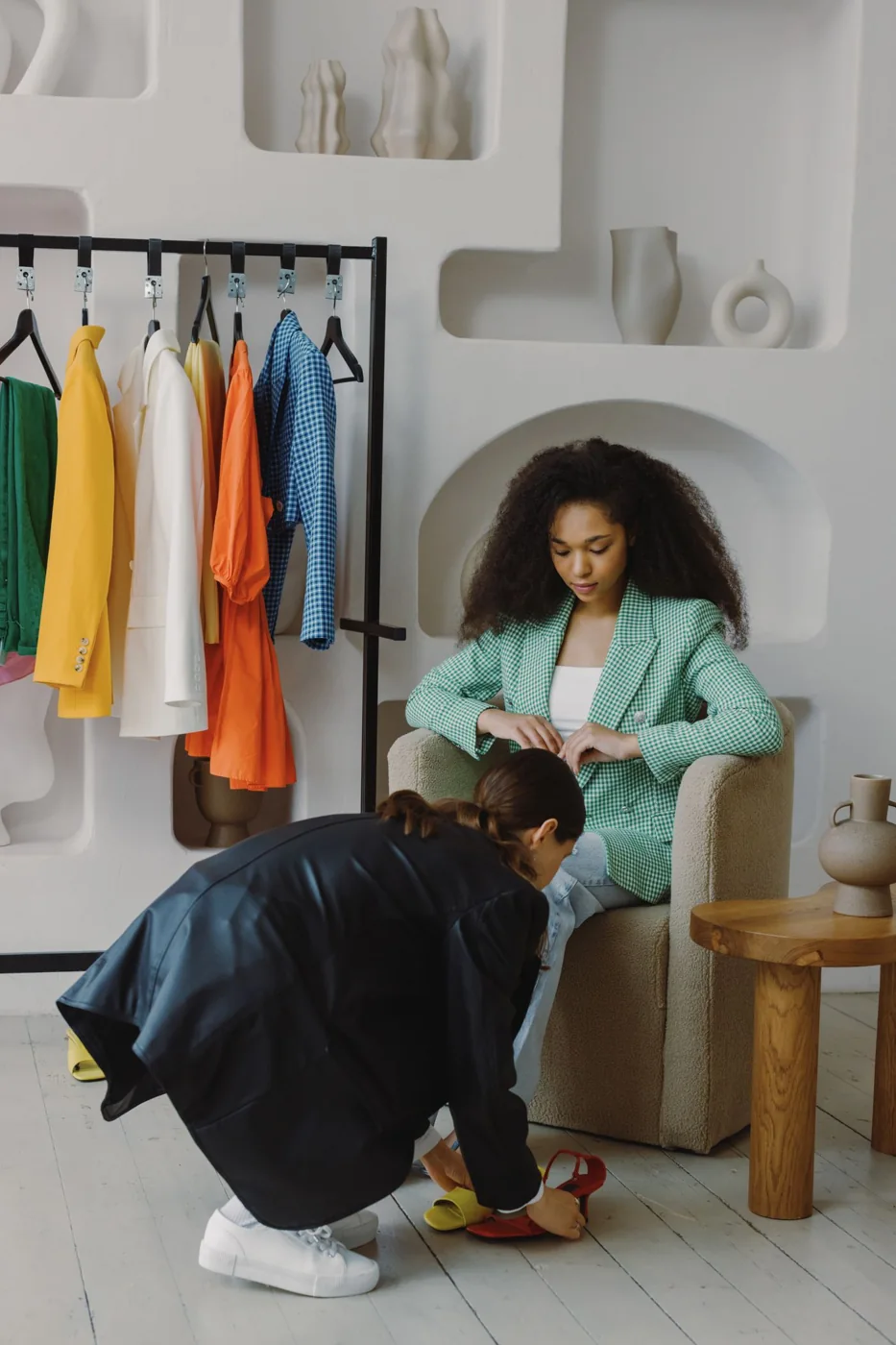
Editorial stock photograph · Source and photographer. Styling illustration; no product endorsement implied.
A fitting companion can offer helpful perspective while still answering a different question from the one you meant to ask. You may want to know how a jacket meets the trousers, while they begin choosing a new colour palette or commenting on every item in the shop. Give the conversation one clear question. That small boundary makes the second opinion more useful without asking the other person to become responsible for the whole purchase decision.
Decide what you need help seeing
Name the actual issue before inviting an opinion. It might concern the back view, the visible sleeve edge or the relationship between one candidate and an owned garment. A concrete question is easier to answer than a broad request to say whether everything looks good.
Keep your own comfort and preferences central. Another person can describe what they see, but they cannot establish how the garment feels during ordinary movement or decide which level of coverage you want.
Show the relevant arrangement
Wear the candidate with the pieces that matter to the question where practical. If the comparison concerns a trouser hem, include the intended shoes. If it concerns a layer, use a suitable base rather than asking the companion to imagine a different outfit beneath it.
Let the garment sit normally. Pulling a seam or holding an opening in a special position can make the companion's answer apply to a pose instead of actual wear. Explain any temporary arrangement that is necessary to understand the comparison.
Invite observation before a verdict
Ask what changes between two actual options, or whether the particular detail remains visible from the ordinary view. A description of the difference can be more informative than a rapid choice of favourite.
Separate the answer from a demand to agree. Your companion may notice something useful that does not change your preference. A second opinion can inform the choice without becoming a vote that must override the person wearing the clothes.
Close the question before expanding it
If another issue emerges, decide whether it needs attention now. Do not let one fitting become an unplanned review of every garment already owned. Keep suggestions tied to the original purpose and the actual time available.
Thank the companion for the specific help and make the purchase decision yourself using the product information, fit and relevant terms. Their encouragement is not a guarantee about future use, and uncertainty does not need to be resolved by buying both options.
A useful fitting conversation ends with a clearer observation, not necessarily an immediate purchase. Keeping the question narrow leaves room for different tastes and prevents a generous offer of company from becoming a complete wardrobe redesign. The clothes remain connected to the wearer's real needs, while the second viewpoint does the modest job it was invited to do.
Related reading
A Fitting-Room Routine for Clothes You Will Actually Wear, Give an Uncertain Wardrobe Decision a Defined Pause.
Check your wardrobe first, note the gap you want to fill, then compare fabric, fit, care instructions and the retailer’s current return terms.
Explore our retailer directory →