A Footwear Inventory with Actual Pair Identity
Keep a footwear inventory tied to actual pair identity and ownership, preserving useful product references without treating a crowded shelf photograph as a complete record.
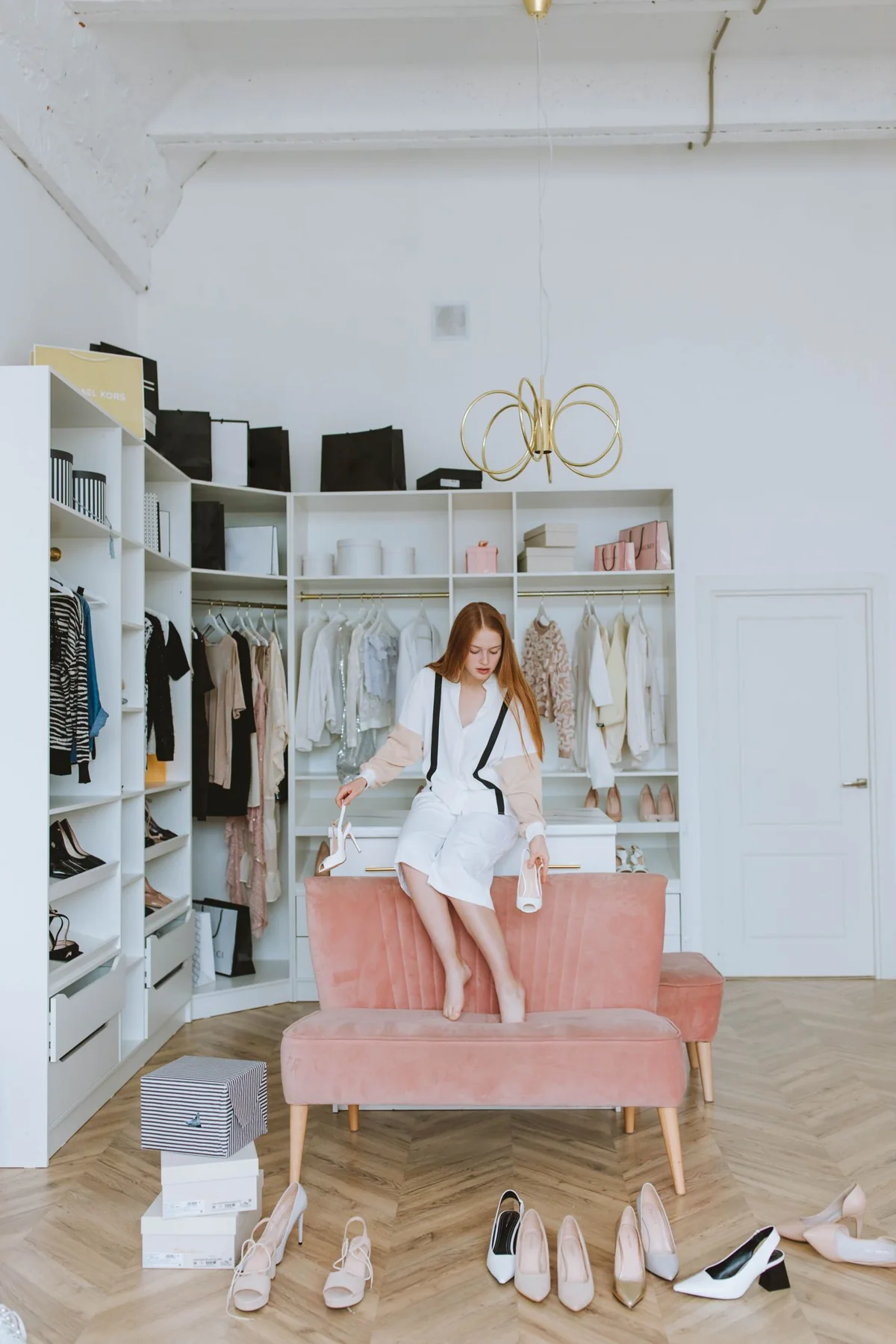
Editorial stock photograph · Source and photographer. Styling illustration; no product endorsement implied.
A shelf photograph can remind you that several shoes are already owned while leaving the particular pair difficult to identify. Similar shapes, hidden labels and single shoes turned away can make the image less informative than it appears. Keep a footwear inventory connected to actual pair identity. It should answer an ordinary wardrobe question rather than create a decorative catalogue detached from the belongings.
Decide what you need to know
Begin with a real purpose, such as remembering whether an existing pair serves a planned outfit. A clear question keeps the record proportionate. You do not need a complex database simply because several pairs share a storage area.
Read available product information and preserve the maker and precise identity where useful. A description such as “pale shoes” may aid recognition but can fail when another similar pair arrives. Keep uncertainty visible rather than assigning details from memory.
Record pairs as actual sets
Identify the relevant pair without assuming every nearby shoe belongs together. A storage photograph can show several single items during dressing. Keep the inventory connected to ownership and the set you genuinely have.
Do not infer material, suitability or condition from the image alone. A familiar silhouette is not a complete product reference. Read the guidance for the actual footwear and seek appropriate clarification where an important question remains unanswered.
Preserve current status separately
A pair’s presence in storage does not establish readiness for its next role. Keep unfinished care or another relevant task with the real item. A brief private note can preserve that distinction without making the storage space visually complicated.
Follow the product’s appropriate care and storage information. Avoid turning every shoe in the household into one category with one process. Similar colours can belong to products with different constructions and guidance.
Add a limited outfit reference
If a pair worked with a familiar garment, note the actual combination and context. Keep the observation personal rather than promising the same comfort or appearance for every activity. Another day can call for a different choice.
A private photograph may help identify the outfit, provided its limits remain clear. Lighting and camera angles can alter appearance, while a still image cannot describe a whole day’s experience. The record supports memory without replacing your actual review.
Update when belongings change
Mark or remove an active entry when the pair leaves your wardrobe. Keep a historical reference only where it serves a clear purpose and does not imply current availability. Review an uncertain identity before allowing it to govern a shopping decision.
A useful footwear inventory is modest and accurate. It connects actual pairs with relevant product information, ownership and real outfit roles, making existing belongings easier to consider without letting a crowded shelf photograph appear more complete than it is.
Related reading
Choosing Shoes for a Walkable Commute, Visible Socks with Everyday Shoes, without the Guesswork.
Check your wardrobe first, note the gap you want to fill, then compare fabric, fit, care instructions and the retailer’s current return terms.
Explore our retailer directory →