Keep a Missing Material Label as an Open Question
Keep a missing material label as an open question, using the actual garment and available records before a familiar texture becomes a confident claim about composition or care.
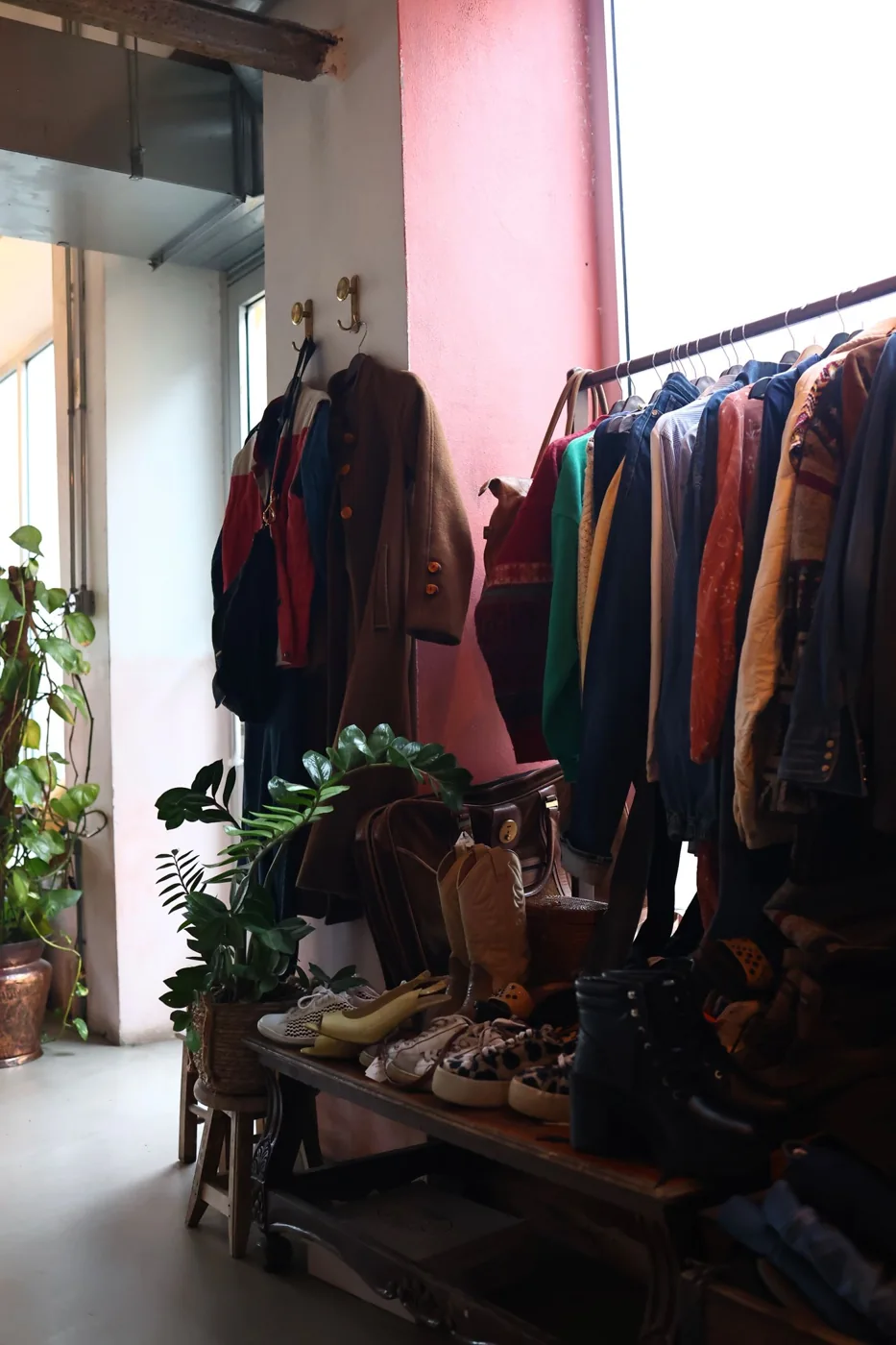
Editorial stock photograph · Source and photographer. Styling illustration; no product endorsement implied.
An older or pre-owned garment may arrive without a readable material label. Its texture can suggest a familiar fabric, but appearance and touch alone should not become a confident composition claim. Keep the missing information visible while deciding whether the piece suits the intended wardrobe role. A useful inquiry distinguishes what is known about the actual garment from a guess borrowed from similar clothes or a general product photograph.
Look for information already connected to the piece
Check the garment's existing labels and any retained purchase or maker reference. Keep identifiers intact where they are useful. A separate care label may contain relevant information even when the main brand label says little about composition.
For a listing, ask the seller what information is actually available. Request a readable image of relevant labels where appropriate. Do not treat a broad style name or a seller's impression as equivalent to a documented material statement.
Preserve the difference between description and fact
You can describe a visible surface as smooth, open-textured or softly draping without declaring its fibre content. Those observations may help explain why the garment appeals while leaving the composition question unresolved.
If the seller offers an attribution, record it as their statement unless supporting information establishes more. A neat wardrobe note should not become more certain than its source merely because the garment resembles a familiar fabric.
Keep care separate from visual resemblance
Do not choose a treatment by copying the routine for a similar-looking garment. The missing label creates a real information gap, particularly where an unfamiliar finish, lining or construction is involved.
Seek appropriate qualified guidance where necessary and explain what information is absent. Avoid improvised tests or an unagreed service intended to prove a material guess. The aim is a suitable decision about the actual item, not a home experiment that changes it.
Decide whether the uncertainty matters to the purchase
Consider the role the garment needs to serve and the information required to use and care for it appropriately. An unresolved material question may make one candidate unsuitable even when its colour and shape are appealing.
Keep that tradeoff explicit rather than compensating with a romantic story about older clothing. A garment can be attractive without being the right addition to this wardrobe. Declining a piece because an important question remains open is a complete decision.
Retain any reliable answer with the item's identity if the uncertainty is later resolved. Otherwise keep the note honest about its limits. A missing label does not need to be filled with an invented fact. Clear uncertainty supports better shopping and care choices than a confident material name inferred from the way a garment looks on a rail.
Related reading
A Realistic Knitwear Care Routine, A Light-Garment Reference with Its Image Limits Clear.
Check your wardrobe first, note the gap you want to fill, then compare fabric, fit, care instructions and the retailer’s current return terms.
Explore our retailer directory →