A Monochrome Outfit Reference with Missing Details Clear
Use a monochrome outfit reference for visible arrangement while keeping missing details clear, letting actual clothing answer questions the image cannot establish.
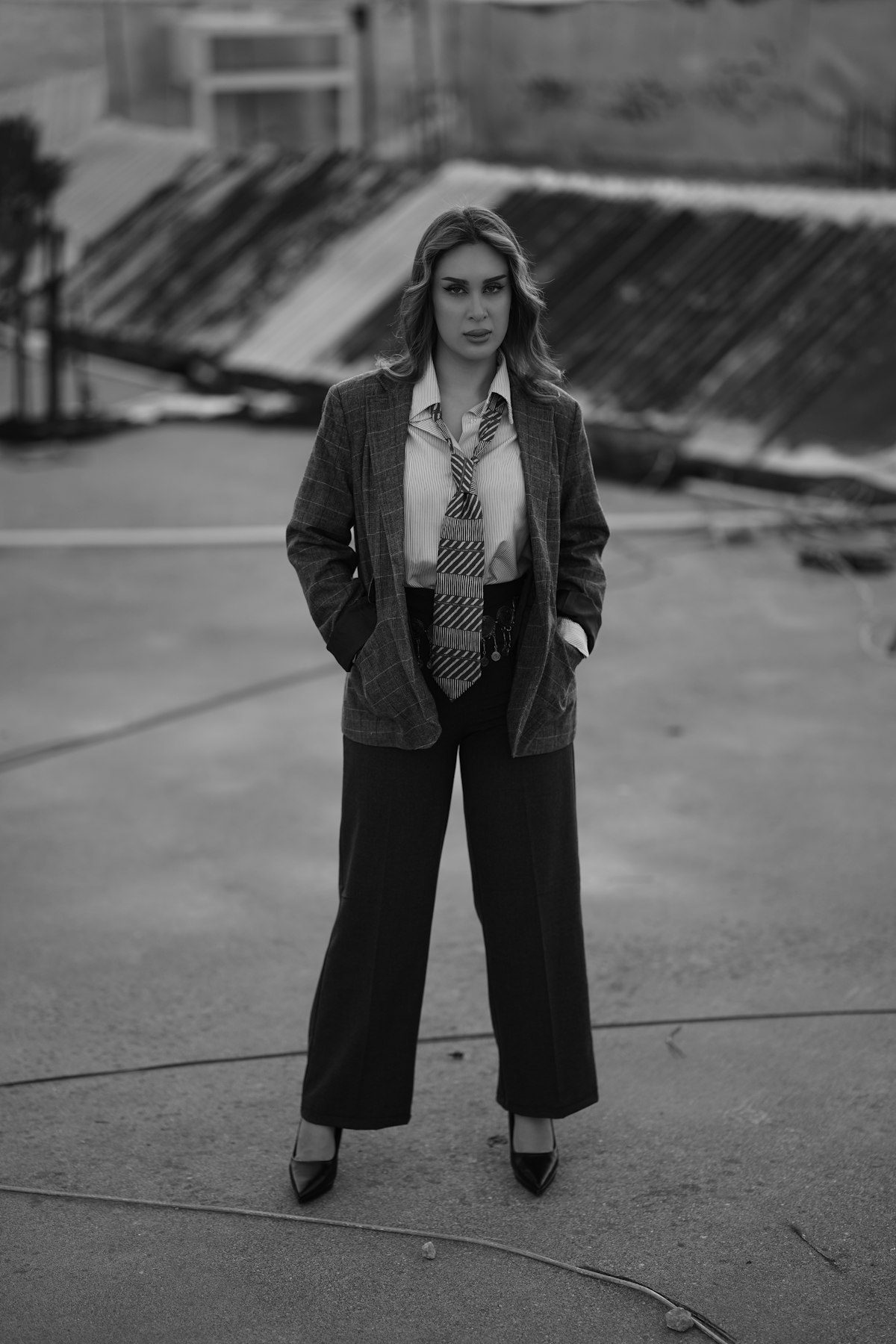
Editorial stock photograph · Source and photographer. Styling illustration; no product endorsement implied.
A monochrome outfit reference can clarify visible shape while removing information that matters to real clothing decisions. Colours, some surface differences and precise product identities may remain unknown. Keep those limits visible before using the image to build an outfit. It can support a useful observation without becoming a complete specification or a universal formula.
Name the visible relationship
Describe what you can actually see in ordinary language. An open jacket beside wide-leg trousers can be a useful observation without assigning a fibre, maker or exact colour. Keep the description separate from any supplied source information.
Notice what is hidden or cropped. A partially visible sleeve or fastening remains uncertain. Do not complete the photograph with the construction of a familiar garment and then attribute that imagined detail to the image.
Preserve the source and purpose
Keep the source where appropriate and use images only in a context you are entitled to save or share. A private inspiration note may be enough. The image does not need to become public advice to support your own wardrobe experiment.
Name the particular detail that attracted you. A broad folder labelled “good outfits” can lose the practical question. A short note about an opening or shape relationship is more useful than an unexplained collection of near-identical pictures.
Choose actual existing garments
Begin with suitable familiar pieces rather than buying a duplicate of every visible object. Your own jacket and trousers can explore the relationship without claiming to reproduce another person’s outfit precisely.
Read relevant product guidance for the garments you use. The reference does not transfer care needs or construction between products. Keep an unresolved question with the actual item instead of treating visual similarity as a complete answer.
Restore the missing decisions
Look at your real colours and surfaces in suitable light. A monochrome photograph cannot settle those relationships for you. Personal preference can guide the choice without a claim about what the original image’s colours must have been.
Try ordinary movement and relevant layer changes in a suitable space. Include the actual bag and belongings within product guidance. A still image records one moment rather than evidence that a different outfit will remain comfortable throughout your activity.
Keep the result specific
If the combination works, record the actual pieces and the particular reference detail that helped. Include a relevant limitation where useful. Another jacket or pair of trousers may have different construction and deserve a fresh review.
After wearing, follow each item’s appropriate care and storage. A limited monochrome reference can sharpen attention to arrangement while leaving colour, identity and daily use to the real wardrobe. Respecting that boundary makes the inspiration more understandable and keeps missing information from silently becoming invented certainty.
Related reading
Giving a One-Colour Outfit Depth with Texture, A Capsule Wardrobe Built Around Your Actual Week.
Check your wardrobe first, note the gap you want to fill, then compare fabric, fit, care instructions and the retailer’s current return terms.
Explore our retailer directory →